
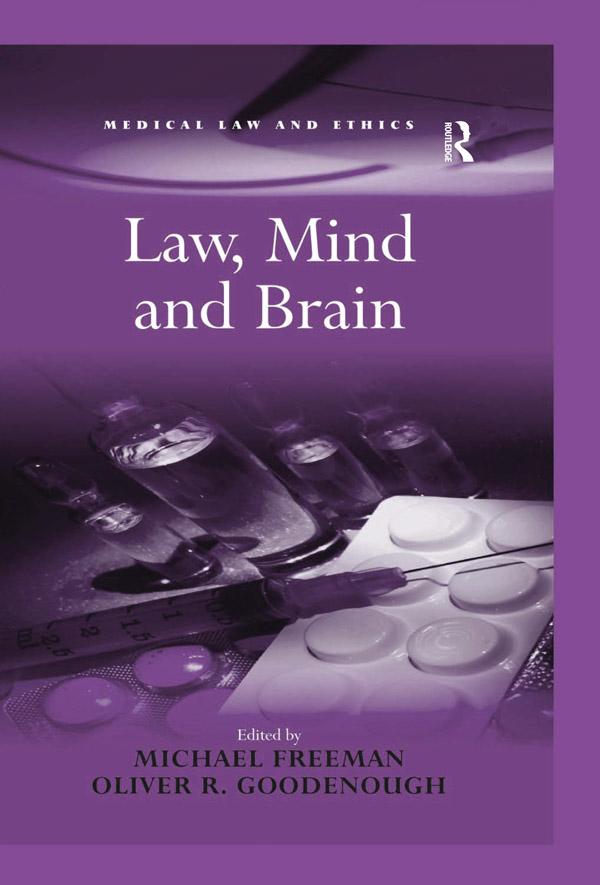
Over the past 20 years, cognitive neuroscience has revolutionized our ability to understand the nature of human thought. Working with the understandings of traditional psychology, the new brain science is transforming many disciplines, from economics to literary theory. These developments are now affecting the law and there is an upsurge of interest in the potential of neuroscience to contribute to our understanding of criminal and civil law and our system of justice in general. The international and interdisciplinary chapters in this volume are written by experts in criminal behaviour, civil law and jurisprudence. They concentrate on the potential of neuroscience to increase our understanding of blame and responsibility in such areas as juveniles and the death penalty, evidence and procedure, neurological enhancement and treatment, property, end-of-life choices, contracting and the effects of words and pictures in law. This collection suggests that legal scholarship and practice will be increasingly enriched by an interdisciplinary study of law, mind and brain and is a valuable addition to the emerging field of neurolaw.
Płać wygodnie kartą, Klarną, Apple Pay lub Google Pay. Nie jesteś zadowolony? Zawsze masz 14-dniową gwarancję zwrotu pieniędzy. Więcej przeczytasz w naszych warunkach. Masz pytania? Napisz do nas na hello@memmo.org.
Memmo ułatwia naukę – gdziekolwiek jesteś na świecie. U nas znajdziesz podręczniki i sprytne narzędzia do nauki w jednym miejscu: streszczenia, quizy, podcasty i fiszki. A do tego Ted, Twój kumpel do nauki, który odpowie na wszystko, co Cię nurtuje. Ponad 50 000 studentów już tu się uczy – stworzone, byś uczył się szybciej i mniej stresował.
Może Ci się spodobać
Kup książkę0