
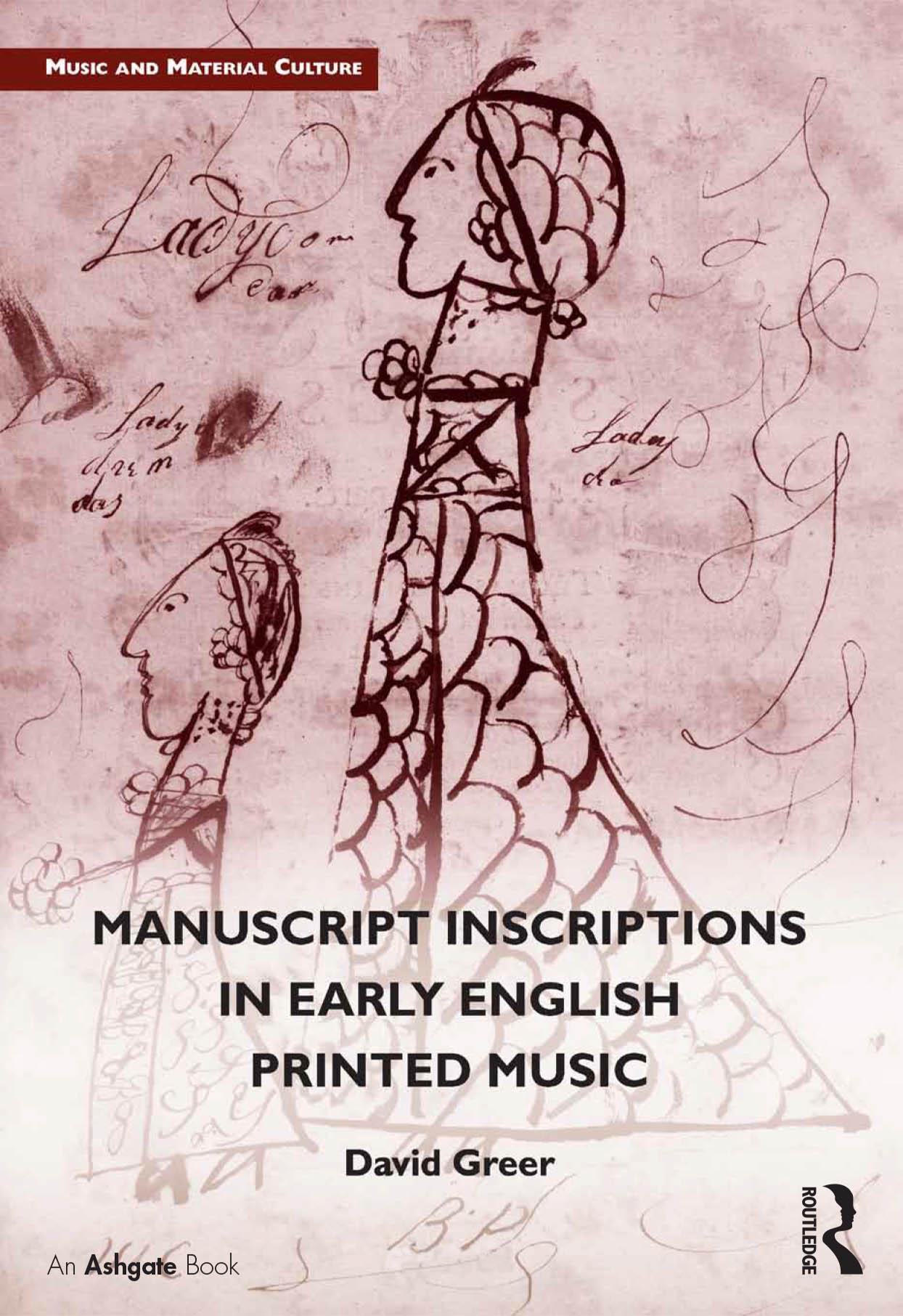
Who were the first owners of the music published in England in the sixteenth and early seventeenth centuries? Who went to ‘the dwelling house of … T. East, by Paules wharfe’ and bought a copy of Byrd’s Psalmes, sonets, & songs when it appeared in 1588? Who purchased a copy of Dowland’s First booke of songes in 1597? What other books formed part of their music library? In this survey of surviving books of music published before 1640, David Greer has gleaned information about the books’ early and subsequent owners by studying the traces they left in the books themselves: handwritten inscriptions, including names and other marks of ownership - even the scribbles and drawings a child of the family might put into a book left lying about.
The result is a treasure trove of information about musical culture in early modern England. From inscriptions and marks of ownership Greer has been able to re-assemble early sets of partbooks, as well as collections of books once bound together. The search has also turned up new music. At a time when paper was expensive, new pieces were copied into blank spaces in printed books. In these jottings we find a ‘hidden repertory’ of music, some of it otherwise undiscovered music by known composers. In other cases, we see owners altering the words of songs, to suit new and personal purposes: a love-song in praise of Daphne becomes a heartfelt song to ‘my Jesus’; and ‘Faire Leonilla’ becomes Ophelia (perhaps the first mention of this character in Hamlet outside the play itself). On a more practical level, the users of the music sometimes made corrections to printing errors, and there are indications that some of these were last-minute corrections made in the printing-house (a useful guide for the modern editor). The temptation to ‘scribble in books’ was as irresistible to some Elizabethans as it is to some of us today. In doing so they left us clues to their identity, how they kept their music, how they used it, and the multifarious ways in which it played a part in their lives.
Płać wygodnie kartą, Klarną, Apple Pay lub Google Pay. Nie jesteś zadowolony? Zawsze masz 14-dniową gwarancję zwrotu pieniędzy. Więcej przeczytasz w naszych warunkach. Masz pytania? Napisz do nas na hello@memmo.org.
Memmo ułatwia naukę – gdziekolwiek jesteś na świecie. U nas znajdziesz podręczniki i sprytne narzędzia do nauki w jednym miejscu: streszczenia, quizy, podcasty i fiszki. A do tego Ted, Twój kumpel do nauki, który odpowie na wszystko, co Cię nurtuje. Ponad 50 000 studentów już tu się uczy – stworzone, byś uczył się szybciej i mniej stresował.