
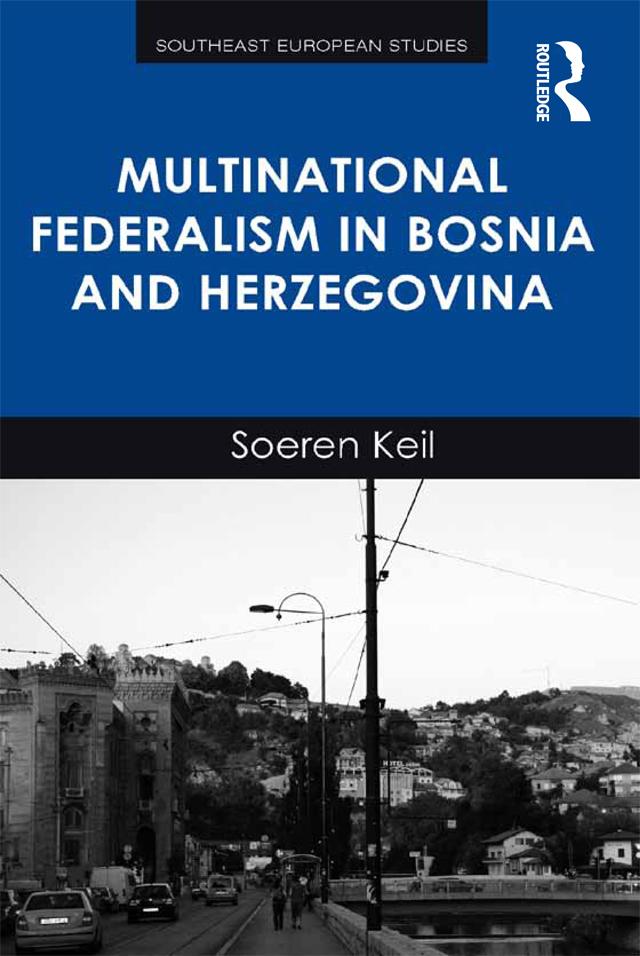
In 1995 none of the political parties representing the peoples of Bosnia preferred a federal option. Yet, Bosnia became a federal state, highly decentralised and with a complex institutional architecture. This solution was imposed on them by international actors as a result of peace negotiations following the Yugoslav wars. Political parties in post-war Bosnia were not willing to identify with or accept the federation. The international community intervened taking over key decisions and so Bosnia and Herzegovina became the first state to experience a new model of federalism, namely ’imposed federalism’ and a new model of a federal state, that of the ’internationally administered federation’. By combining comparative politics, conflict analysis and international relations theory Soeren Keil offers a unique analysis of federalism in post-Dayton Bosnia and Herzegovina. By exploring this model of ’imposed federalism’ not only does this study greatly contribute to the literature on developments in Bosnia and Herzegovina it also re-evaluates comparative federalism in theory and practice. This study also offers important conclusions for similar cases, both in the Western Balkans region and the wider world, where international involvement and federalism as a method of conflict resolution in diverse societies becomes ever more prevalent and important.
Płać wygodnie kartą, Klarną, Apple Pay lub Google Pay. Nie jesteś zadowolony? Zawsze masz 14-dniową gwarancję zwrotu pieniędzy. Więcej przeczytasz w naszych warunkach. Masz pytania? Napisz do nas na hello@memmo.org.
Memmo ułatwia naukę – gdziekolwiek jesteś na świecie. U nas znajdziesz podręczniki i sprytne narzędzia do nauki w jednym miejscu: streszczenia, quizy, podcasty i fiszki. A do tego Ted, Twój kumpel do nauki, który odpowie na wszystko, co Cię nurtuje. Ponad 50 000 studentów już tu się uczy – stworzone, byś uczył się szybciej i mniej stresował.
Może Ci się spodobać
Kup książkę0