
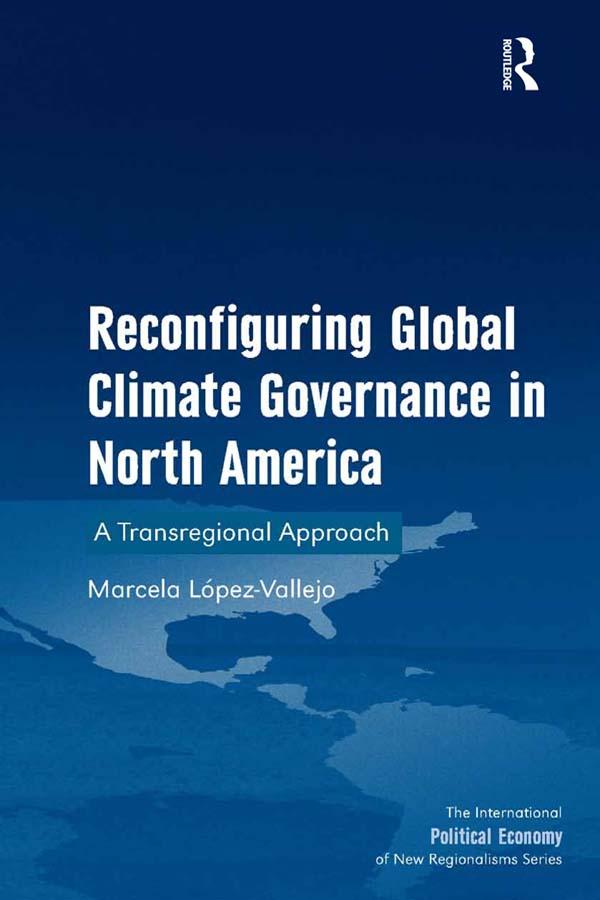
Global climate governance has presented problems that have led to failures, yet it has also opened the door to new transregional governance schemes, especially in North America. This book introduces an environmental dimension into the concept of governance. Almost fifteen years after the climate global governance concept emerged, results worldwide have not been as favorable as expected. This book details previous discussions about the concept of global climate governance and its limits. It highlights how the Kyoto Protocol has a limited design taking into account a national approach to global, regional, and transnational problems, had no obligatory mechanisms for implementation and explains the emergence of new polluters not committed under it such as China and India. Furthermore this book explores other levels of authority such as regional institutions - the North American agreement on trade (NAFTA) and on environment (NAAEC), as well as the regional energy working group (NAEWG). The author puts forward a theoretical proposal for re-territorialization and coordination of policies for climate change into new forms of articulating interests in what she terms transnational green economic regions (TGERs) and tests this on two case studies - the Regional Greenhouse Gas Initiative (RGGI) and the Western Climate Initiative (WCI). This study presents the challenges and opportunities of a transregional approach in North America.
Płać wygodnie kartą, Klarną, Apple Pay lub Google Pay. Nie jesteś zadowolony? Zawsze masz 14-dniową gwarancję zwrotu pieniędzy. Więcej przeczytasz w naszych warunkach. Masz pytania? Napisz do nas na hello@memmo.org.
Memmo ułatwia naukę – gdziekolwiek jesteś na świecie. U nas znajdziesz podręczniki i sprytne narzędzia do nauki w jednym miejscu: streszczenia, quizy, podcasty i fiszki. A do tego Ted, Twój kumpel do nauki, który odpowie na wszystko, co Cię nurtuje. Ponad 50 000 studentów już tu się uczy – stworzone, byś uczył się szybciej i mniej stresował.
Może Ci się spodobać
Kup książkę0