
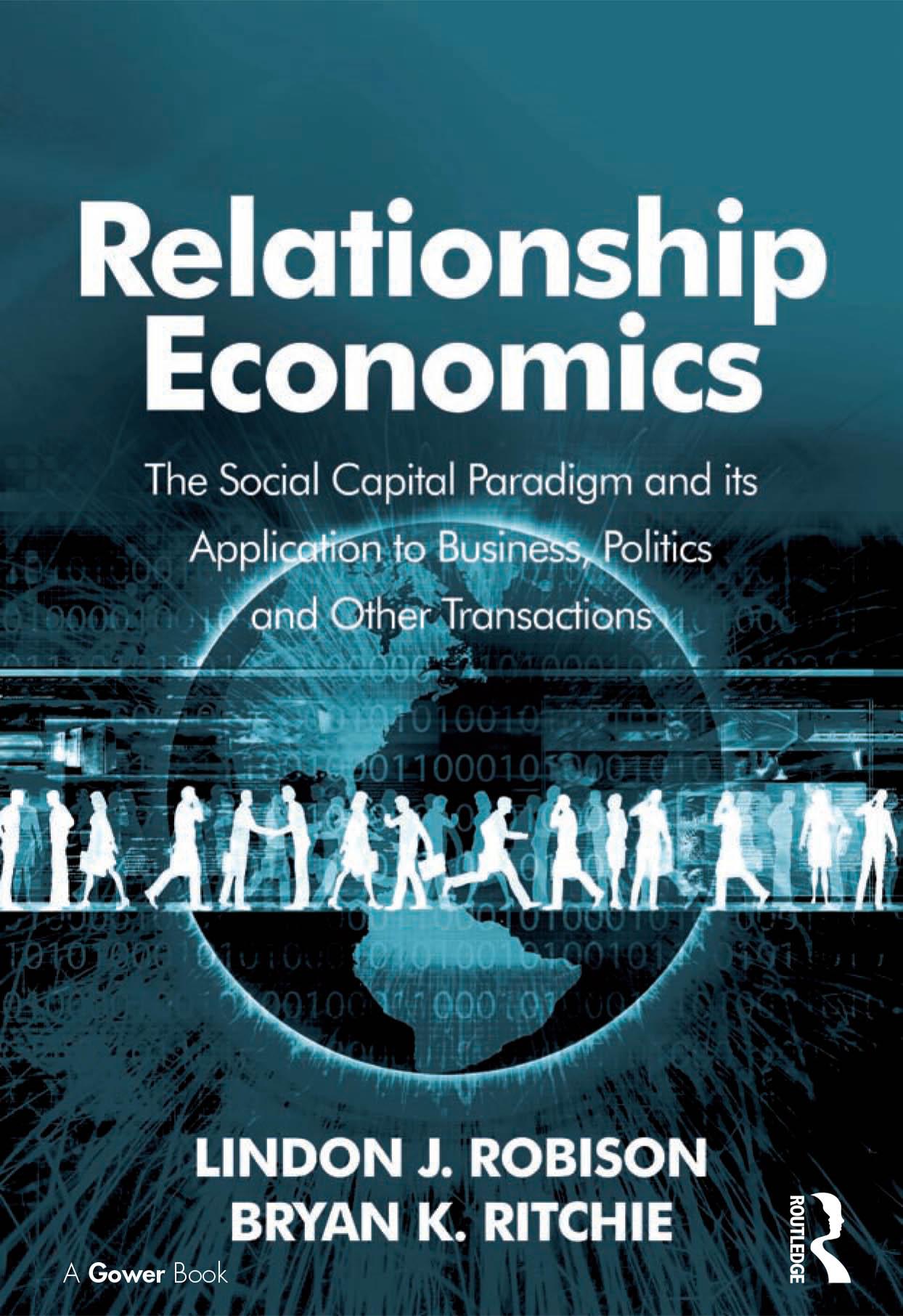
In a 24/7 world and a global economy, there is no doubt that relationships impact virtually every economic transaction. In Relationship Economics, Lindon Robison and Bryan Ritchie argue that what needs to be understood is not just whether relationships matter (which, of course, they do), but also, how much, and in what circumstances they should matter. Providing a rigorous and measurable definition of the way that relationships among individuals create a capital, social capital, that can be saved, spent, and used like other forms of capital, Robison and Ritchie use numerous examples and insightful analysis, to explain how social capital shapes our ability to reduce poverty, understand corruption, encourage democracy, facilitate income equality, and respond to globalization. The first part of the book explains how social capital can be manipulated, stored, expended, and invested. The second part explores how levels of social capital within relationships influence economic transactions both positively and negatively, which in turn shape poverty levels, economic efficiency, levels and types of political participation, and institutional structures.
Płać wygodnie kartą, Klarną, Apple Pay lub Google Pay. Nie jesteś zadowolony? Zawsze masz 14-dniową gwarancję zwrotu pieniędzy. Więcej przeczytasz w naszych warunkach. Masz pytania? Napisz do nas na hello@memmo.org.
Memmo ułatwia naukę – gdziekolwiek jesteś na świecie. U nas znajdziesz podręczniki i sprytne narzędzia do nauki w jednym miejscu: streszczenia, quizy, podcasty i fiszki. A do tego Ted, Twój kumpel do nauki, który odpowie na wszystko, co Cię nurtuje. Ponad 50 000 studentów już tu się uczy – stworzone, byś uczył się szybciej i mniej stresował.
Może Ci się spodobać
Kup książkę0