
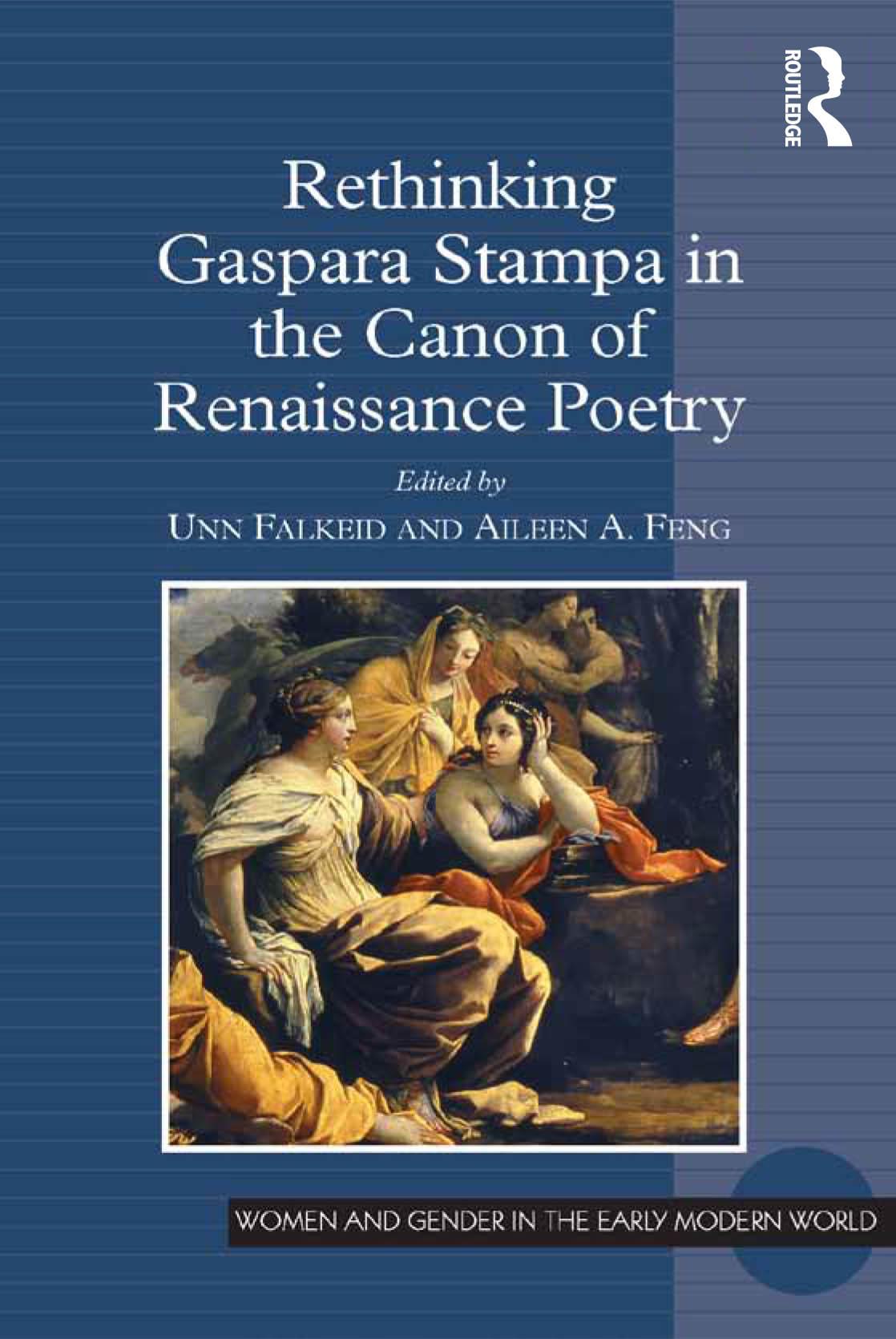
Despite the fact that Gaspara Stampa (1523?-1554) has been recognized as one of the greatest and most creative poets and musicians of the Italian Renaissance, scholarship on her work has been surprisingly scarce and uncoordinated. In recent years, critical attention towards her work has increased, but until now there have been no anthologies dedicated solely to Stampa. Rethinking Gaspara Stampa in the Canon of Renaissance Poetry aims to set a foundation for further Stampa studies by accounting for her contributions to literature, music history, gender studies, the history of ideas, philosophy, and other areas of critical thought. This volume brings together an international group of interdisciplinary scholars who employ varied methodologies to explore multiple aspects of Stampa’s work in dialogue with the most recent scholarship in the field. The chapters emphasize the many ways in which Stampa’s poetry engages with multiple cultural movements of early modern Italy and Europe, including: Ficinian and Renaissance Neoplatonism, male-authored writing about women, Longinus’s theory of the sublime, the formation of writing communities, the rediscovery of Aristotle’s writings, and the reimagined relation between human and natural worlds. Taken as a whole, this volume presents a rich introduction to, and interdisciplinary investigation of, Gaspara Stampa’s impact on Renaissance culture.
Strony: 236
Kategoria: Litteraturvetenskap & Teori
e-ISBN: 9781317064206
Waga przesyłki: 1.2 kg
Wysyłka w ciągu: 1-2 dni
Płać wygodnie kartą, Klarną, Apple Pay lub Google Pay. Nie jesteś zadowolony? Zawsze masz 14-dniową gwarancję zwrotu pieniędzy. Więcej przeczytasz w naszych warunkach. Masz pytania? Napisz do nas na hello@memmo.org.
Memmo ułatwia naukę – gdziekolwiek jesteś na świecie. U nas znajdziesz podręczniki i sprytne narzędzia do nauki w jednym miejscu: streszczenia, quizy, podcasty i fiszki. A do tego Ted, Twój kumpel do nauki, który odpowie na wszystko, co Cię nurtuje. Ponad 50 000 studentów już tu się uczy – stworzone, byś uczył się szybciej i mniej stresował.
Może Ci się spodobać
Kup książkę0