
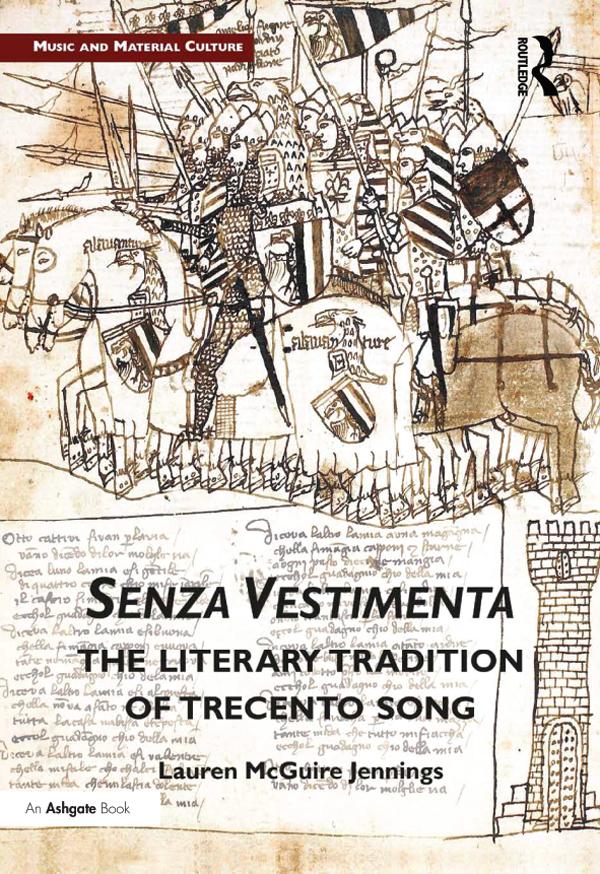
The metaphor of marriage often describes the relationship between poetry and music in both medieval and modern writing. While the troubadours stand out for their tendency to blur the distinction between speaking and singing, between poetry and song, a certain degree of semantic slippage extends into the realm of Italian literature through the use of genre names like canzone, sonetto, and ballata. Yet, paradoxically, scholars have traditionally identified a 'divorce' between music and poetry as the defining feature of early Italian lyric. Senza Vestimenta reintegrates poetic and musical traditions in late medieval Italy through a fresh evaluation of more than fifty literary sources transmitting Trecento song texts. These manuscripts have been long noted by musicologists, but until now they have been used to bolster rather than to debunk the notion that so-called 'poesia per musica' was relegated to the margins of poetic production. Jennings revises this view by exploring how scribes and readers interacted with song as a fundamentally interdisciplinary art form within a broad range of literary settings. Her study sheds light on the broader cultural world surrounding the reception of the Italian ars nova repertoire by uncovering new, diverse readers ranging from wealthy merchants to modest artisans.
Płać wygodnie kartą, Klarną, Apple Pay lub Google Pay. Nie jesteś zadowolony? Zawsze masz 14-dniową gwarancję zwrotu pieniędzy. Więcej przeczytasz w naszych warunkach. Masz pytania? Napisz do nas na hello@memmo.org.
Memmo ułatwia naukę – gdziekolwiek jesteś na świecie. U nas znajdziesz podręczniki i sprytne narzędzia do nauki w jednym miejscu: streszczenia, quizy, podcasty i fiszki. A do tego Ted, Twój kumpel do nauki, który odpowie na wszystko, co Cię nurtuje. Ponad 50 000 studentów już tu się uczy – stworzone, byś uczył się szybciej i mniej stresował.