
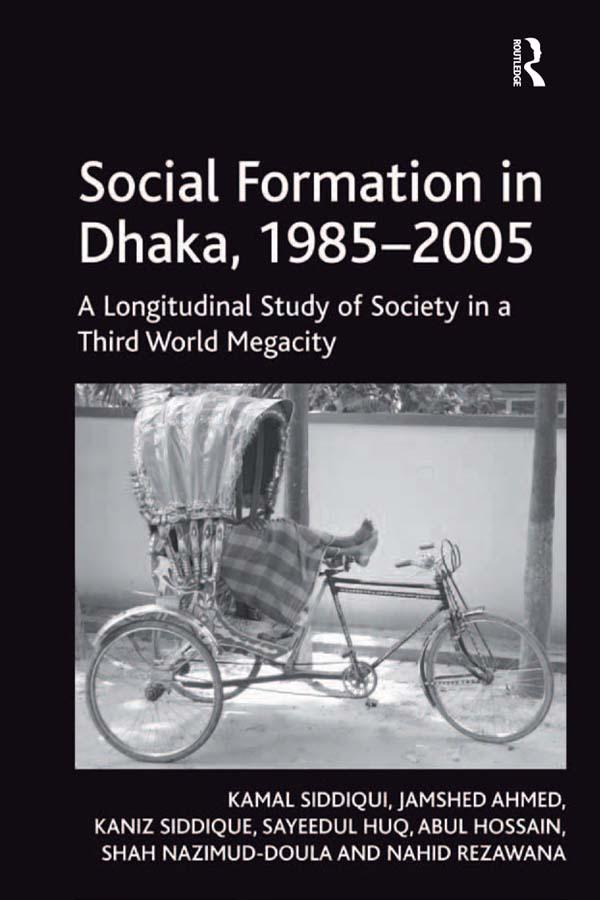
By the middle of the twenty-first century, more than fifty per cent of the world's population will live in an urban environment. Most of this new urban growth will take place in Asia and Africa, yet most governments in these two continents seem woefully unprepared for the challenges they will face in providing their urban citizens with the basic services and security from poverty, environmental degradation and crime. It is in this context that in-depth studies which lay bare the contours and characteristics of society and institutions in the urban setting of Third World countries assume importance and urgency. Most studies on urbanisation in developing countries concentrate on slums and shanty towns in isolation from the rest of the society. By contrast, Social Formation in Dhaka, 1985-2005 analyses urbanisation and urban society in a holistic manner, connecting the poor with the non-poor and delineating the change agents of the city. As the first longitudinal study of the social structure of any Third World Megacity, this book will be of interest to urban sociologists, policy-makers, NGOS, and researchers engaged in understanding the development in cities in the global south.
Płać wygodnie kartą, Klarną, Apple Pay lub Google Pay. Nie jesteś zadowolony? Zawsze masz 14-dniową gwarancję zwrotu pieniędzy. Więcej przeczytasz w naszych warunkach. Masz pytania? Napisz do nas na hello@memmo.org.
Memmo ułatwia naukę – gdziekolwiek jesteś na świecie. U nas znajdziesz podręczniki i sprytne narzędzia do nauki w jednym miejscu: streszczenia, quizy, podcasty i fiszki. A do tego Ted, Twój kumpel do nauki, który odpowie na wszystko, co Cię nurtuje. Ponad 50 000 studentów już tu się uczy – stworzone, byś uczył się szybciej i mniej stresował.
Może Ci się spodobać
Kup książkę0