
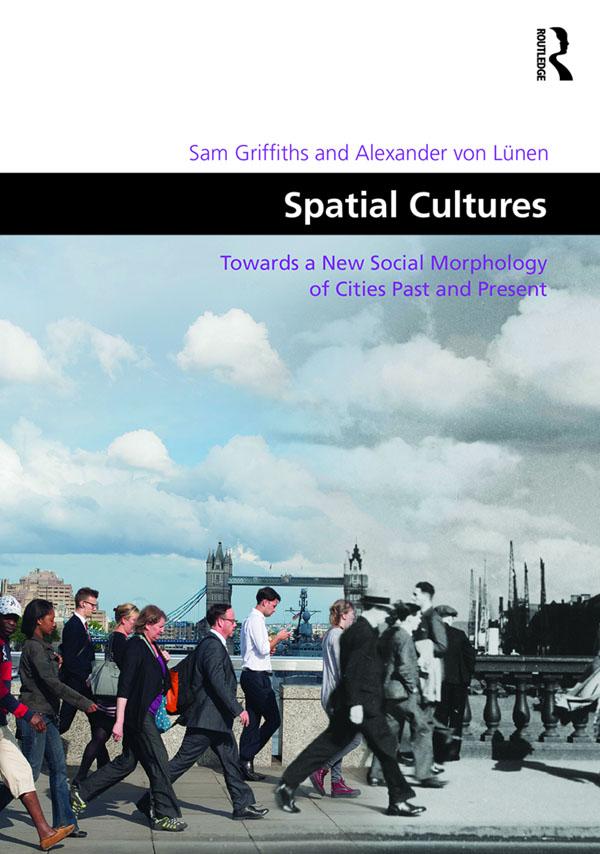
What is the relationship between how cities work and what cities mean? Spatial Cultures: Towards a New Social Morphology of Cities Past and Present announces an innovative research agenda for urban studies in which themes and methods from urban history, social theory and built environment research are brought into dialogue across disciplinary and chronological boundaries. The collection confronts the recurrent epistemological impasse that arises between research focussing on the description of material built environments and that which is concerned primarily with the people who inhabit, govern and write about cities past and present. A reluctance to engage substantively with this issue has been detrimental to scholarly efforts to understand the urban built environment as a meaningful agent of human social experience. Drawing on a wide range of historical and contemporary urban case studies, as well as a selection of theoretical and methodological reflections, the contributions to this volume seek to historically, geographically and architecturally contextualize diverse spatial practices including movement, encounter, play, procession and neighbourhood. The aim is to challenge their tacit treatment as universal categories in much writing on cities and to propose alternative research possibilities with implications as much for urban design thinking as for history and the social sciences.
Płać wygodnie kartą, Klarną, Apple Pay lub Google Pay. Nie jesteś zadowolony? Zawsze masz 14-dniową gwarancję zwrotu pieniędzy. Więcej przeczytasz w naszych warunkach. Masz pytania? Napisz do nas na hello@memmo.org.
Memmo ułatwia naukę – gdziekolwiek jesteś na świecie. U nas znajdziesz podręczniki i sprytne narzędzia do nauki w jednym miejscu: streszczenia, quizy, podcasty i fiszki. A do tego Ted, Twój kumpel do nauki, który odpowie na wszystko, co Cię nurtuje. Ponad 50 000 studentów już tu się uczy – stworzone, byś uczył się szybciej i mniej stresował.