
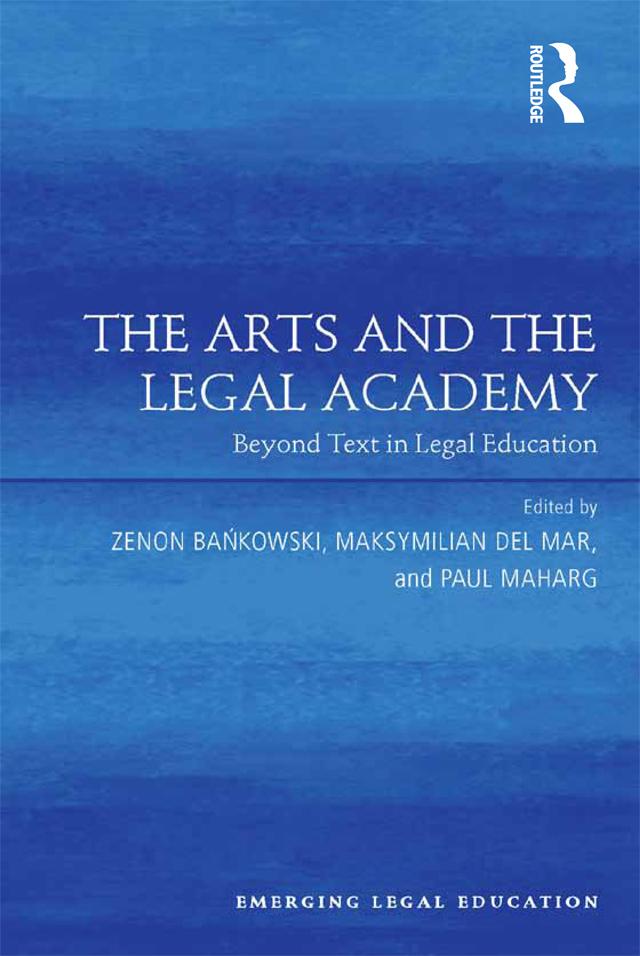
In Western culture, law is dominated by textual representation. Lawyers, academics and law students live and work in a textual world where the written word is law and law is interpreted largely within written and printed discourse. Is it possible, however, to understand and learn law differently? Could modes of knowing, feeling, memory and expectation commonly present in the Arts enable a deeper understanding of law's discourse and practice? If so, how might that work for students, lawyers and academics in the classroom, and in continuing professional development? Bringing together scholars, legal practitioners internationally from the fields of legal education, legal theory, theatre, architecture, visual and movement arts, this book is evidence of how the Arts can powerfully revitalize the theory and practice of legal education. Through discussion of theory and practice in the humanities and Arts, linked to practical examples of radical interventions, the chapters reveal how the Arts can transform educational practice and our view of its place in legal practice. Available in enhanced electronic format, the book complements The Moral Imagination and the Legal Life, also published by Ashgate.
Płać wygodnie kartą, Klarną, Apple Pay lub Google Pay. Nie jesteś zadowolony? Zawsze masz 14-dniową gwarancję zwrotu pieniędzy. Więcej przeczytasz w naszych warunkach. Masz pytania? Napisz do nas na hello@memmo.org.
Memmo ułatwia naukę – gdziekolwiek jesteś na świecie. U nas znajdziesz podręczniki i sprytne narzędzia do nauki w jednym miejscu: streszczenia, quizy, podcasty i fiszki. A do tego Ted, Twój kumpel do nauki, który odpowie na wszystko, co Cię nurtuje. Ponad 50 000 studentów już tu się uczy – stworzone, byś uczył się szybciej i mniej stresował.
Może Ci się spodobać
Kup książkę0