
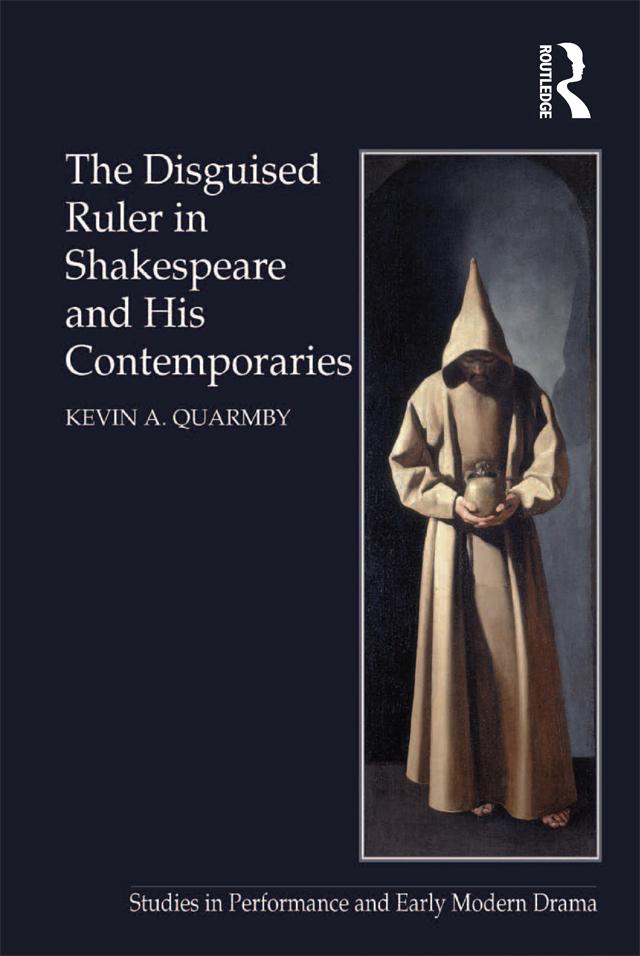
In the early seventeenth century, the London stage often portrayed a ruler covertly spying on his subjects. Traditionally deemed 'Jacobean disguised ruler plays', these works include Shakespeare's Measure for Measure, Marston's The Malcontent and The Fawn, Middleton's The Phoenix, and Sharpham's The Fleer. Commonly dated to the arrival of James I, these plays are typically viewed as synchronic commentaries on the Jacobean regime. Kevin A. Quarmby demonstrates that the disguised ruler motif actually evolved in the 1580s. It emerged from medieval folklore and balladry, Tudor Chronicle history and European tragicomedy. Familiar on the Elizabethan stage, these incognito rulers initially offered light-hearted, romantic entertainment, only to suffer a sinister transformation as England awaited its ageing queen's demise. The disguised royal had become a dangerously voyeuristic political entity by the time James assumed the throne. Traditional critical perspectives also disregard contemporary theatrical competition. Market demands shaped the repertories. Rivalry among playing companies guaranteed the motif's ongoing vitality. The disguised ruler's presence in a play reassured audiences; it also facilitated a subversive exploration of contemporary social and political issues. Gradually, the disguised ruler's dramatic currency faded, but the figure remained vibrant as an object of parody until the playhouses closed in the 1640s.
Strony: 280
Kategoria: Drama, Teater & Scenkonst
e-ISBN: 9781317035558
Waga przesyłki: 1.2 kg
Wysyłka w ciągu: 1-2 dni
Płać wygodnie kartą, Klarną, Apple Pay lub Google Pay. Nie jesteś zadowolony? Zawsze masz 14-dniową gwarancję zwrotu pieniędzy. Więcej przeczytasz w naszych warunkach. Masz pytania? Napisz do nas na hello@memmo.org.
Memmo ułatwia naukę – gdziekolwiek jesteś na świecie. U nas znajdziesz podręczniki i sprytne narzędzia do nauki w jednym miejscu: streszczenia, quizy, podcasty i fiszki. A do tego Ted, Twój kumpel do nauki, który odpowie na wszystko, co Cię nurtuje. Ponad 50 000 studentów już tu się uczy – stworzone, byś uczył się szybciej i mniej stresował.
Może Ci się spodobać
Kup książkę0