
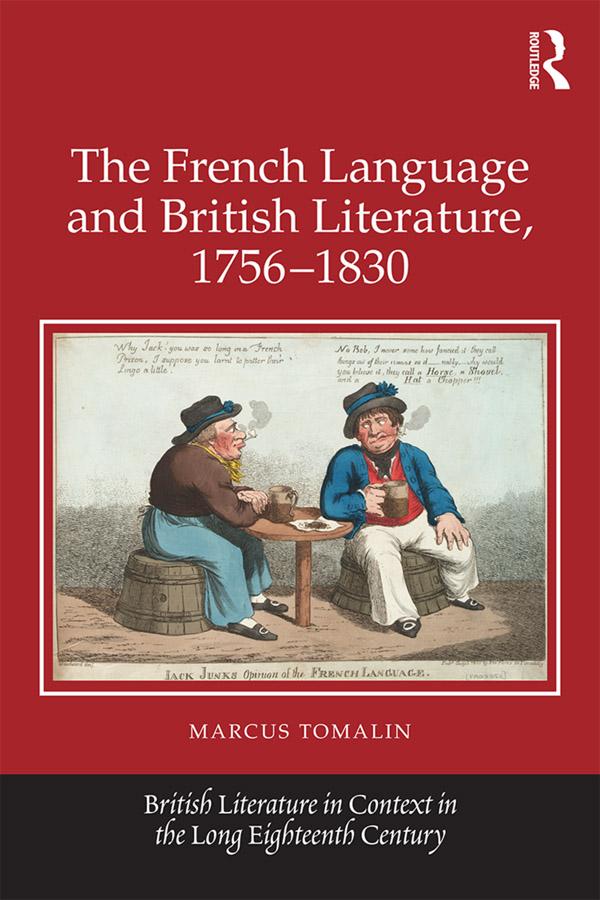
From the 1750s to the 1830s, numerous British intellectuals, novelists, essayists, poets, playwrights, translators, educationalists, politicians, businessmen, travel writers, and philosophers brooded about the merits and demerits of the French language. The decades under consideration encompass a particularly tumultuous period in Anglo-French relations that witnessed the Seven Years' War (1756-1763), the American War of Independence (1775-1783), the Revolutionary and Napoleonic Wars (1792-1802 and 1803-1815, respectively), the Bourbon Restoration (1814-1830), and the July Revolution (1830) - not to mention the gradual expansion of the British Empire, and the complex cultural shifts that led from Neoclassicism to Romanticism. In this book, Marcus Tomalin reassesses the ways in which writers such as Tobias Smollett, Maria Edgeworth, William Wordsworth, John Keats, William Cobbett, and William Hazlitt acquired and deployed French. This intricate topic is examined from a range of critical perspectives, which draw upon recent research into European Romanticism, linguistic historiography, comparative literature, social and cultural history, education theory, and translation studies. This interdisciplinary approach helps to illuminate the deep ambivalences that characterised British appraisals of the French language in the literature of the Romantic period.
Strony: 264
Kategoria: Litteraturvetenskap & Teori
e-ISBN: 9781317031291
Waga przesyłki: 1.2 kg
Wysyłka w ciągu: 1-2 dni
Płać wygodnie kartą, Klarną, Apple Pay lub Google Pay. Nie jesteś zadowolony? Zawsze masz 14-dniową gwarancję zwrotu pieniędzy. Więcej przeczytasz w naszych warunkach. Masz pytania? Napisz do nas na hello@memmo.org.
Memmo ułatwia naukę – gdziekolwiek jesteś na świecie. U nas znajdziesz podręczniki i sprytne narzędzia do nauki w jednym miejscu: streszczenia, quizy, podcasty i fiszki. A do tego Ted, Twój kumpel do nauki, który odpowie na wszystko, co Cię nurtuje. Ponad 50 000 studentów już tu się uczy – stworzone, byś uczył się szybciej i mniej stresował.
Może Ci się spodobać
Kup książkę0