
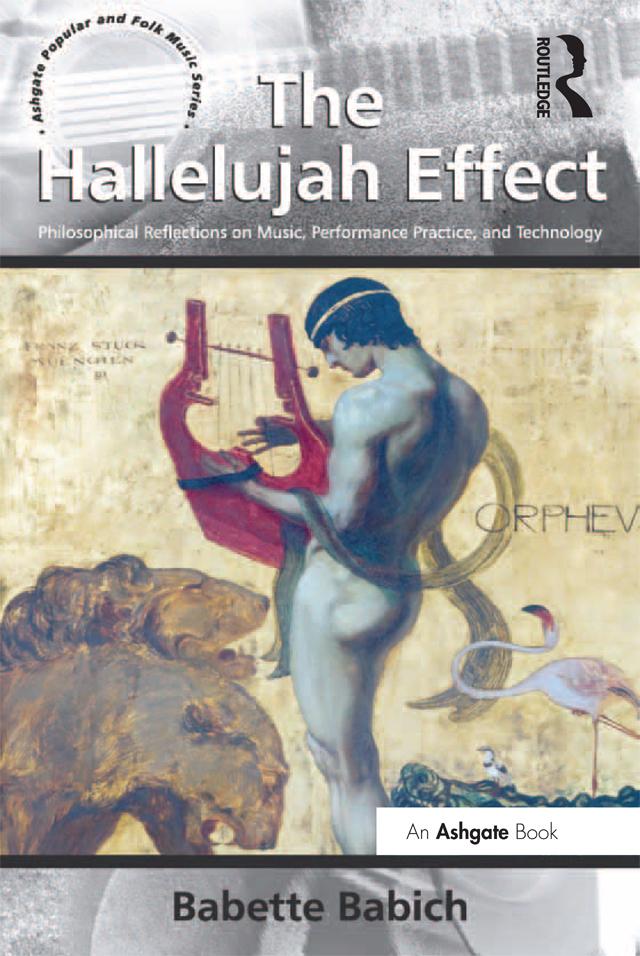
This book studies the working efficacy of Leonard Cohen's song Hallelujah in the context of today's network culture. Especially as recorded on YouTube, k.d. lang's interpretation(s) of Cohen's Hallelujah, embody acoustically and visually/viscerally, what Nietzsche named the 'spirit of music'. Today, the working of music is magnified and transformed by recording dynamics and mediated via Facebook exchanges, blog postings and video sites. Given the sexual/religious core of Cohen's Hallelujah, this study poses a phenomenological reading of the objectification of both men and women, raising the question of desire, including gender issues and both homosexual and heterosexual desire. A review of critical thinking about musical performance as 'currency' and consumed commodity takes up Adorno's reading of Benjamin's analysis of the work of art in the age of mechanical reproduction as applied to music/radio/sound and the persistent role of 'recording consciousness'. Ultimately, the question of what Nietzsche called the becoming-human-of-dissonance is explored in terms of both ancient tragedy and Beethoven's striking deployment of dissonance as Nietzsche analyses both as playing with suffering, discontent, and pain itself, a playing for the sake not of language or sense but musically, as joy.
Płać wygodnie kartą, Klarną, Apple Pay lub Google Pay. Nie jesteś zadowolony? Zawsze masz 14-dniową gwarancję zwrotu pieniędzy. Więcej przeczytasz w naszych warunkach. Masz pytania? Napisz do nas na hello@memmo.org.
Memmo ułatwia naukę – gdziekolwiek jesteś na świecie. U nas znajdziesz podręczniki i sprytne narzędzia do nauki w jednym miejscu: streszczenia, quizy, podcasty i fiszki. A do tego Ted, Twój kumpel do nauki, który odpowie na wszystko, co Cię nurtuje. Ponad 50 000 studentów już tu się uczy – stworzone, byś uczył się szybciej i mniej stresował.
Może Ci się spodobać
Kup książkę0