
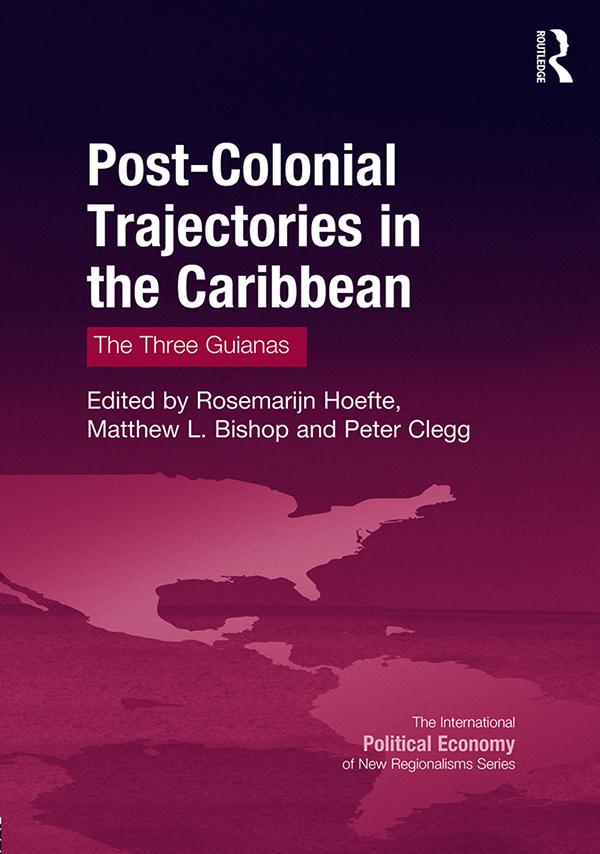
This book compares and contrasts the contemporary development experience of neighbouring, geographically similar countries with an analogous history of exploitation but by three different European colonisers. Studying the so-called ‘Three Guianas’ (Guyana, Suriname and French Guiana) offers a unique opportunity to look for similarities and differences in their contemporary patterns of development, particularly as they grapple with new and complex shifts in the regional, hemispheric and global context. Shaped decisively by their respective historical experiences, Guyana, in tandem with the laissez-faire approach of Britain toward its Caribbean colonies, was decolonised relatively early, in 1966, and has maintained a significant degree of distance from London. The hold of The Hague over Suriname, however, endured well after independence in 1975. French Guiana, by contrast, was decolonised much sooner than both of its neighbours, in 1946, but this was through full integration, thus cementing its place within the political economy and administrative structures of France itself. Traditionally isolated from the Caribbean, the wider Latin American continent and from each other, today, a range of similar issues – such as migration, resource extraction, infrastructure development and energy security – are coming to bear on their societies and provoking deep and complex changes.
Płać wygodnie kartą, Klarną, Apple Pay lub Google Pay. Nie jesteś zadowolony? Zawsze masz 14-dniową gwarancję zwrotu pieniędzy. Więcej przeczytasz w naszych warunkach. Masz pytania? Napisz do nas na hello@memmo.org.
Memmo ułatwia naukę – gdziekolwiek jesteś na świecie. U nas znajdziesz podręczniki i sprytne narzędzia do nauki w jednym miejscu: streszczenia, quizy, podcasty i fiszki. A do tego Ted, Twój kumpel do nauki, który odpowie na wszystko, co Cię nurtuje. Ponad 50 000 studentów już tu się uczy – stworzone, byś uczył się szybciej i mniej stresował.