
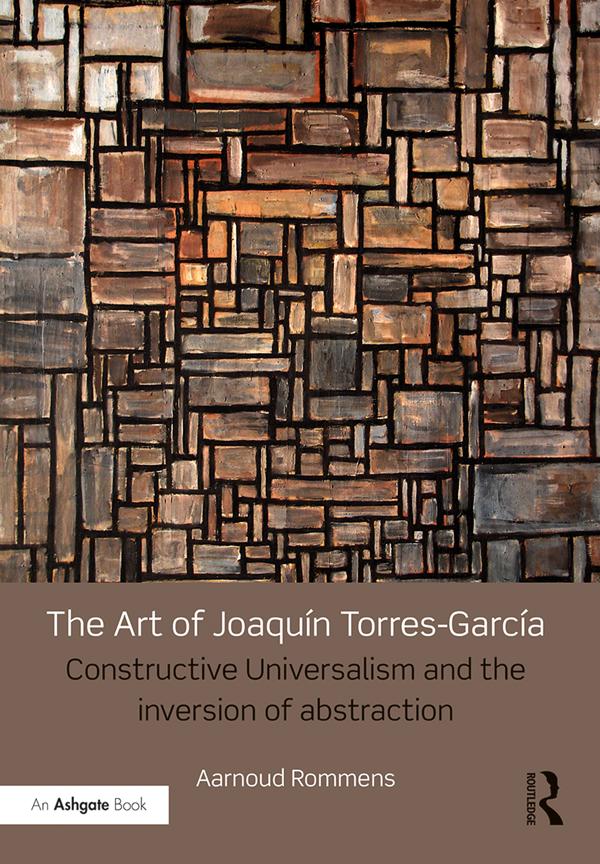
Intertwining art history, aesthetic theory, and Latin American studies, Aarnoud Rommens challenges contemporary Eurocentric revisions of the history of abstraction through this study of the Uruguayan artist Joaquín Torres-García. After studying and painting (for decades) in Europe, Torres-García returned in 1934 to his native home, Montevideo, with the dream of reawakening and revitalizing what he considered the true indigenous essence of Latin American art: "Abstract Spirit." Rommens rigorously analyses the paradoxes of the painter's aesthetic-philosophical doctrine of Constructive Universalism as it sought to adapt European geometric abstraction to the Americas. Whereas previous scholarship has dismissed Torres-García's theories as self-contradictory, Rommens seeks to recover their creative potential as well as their role in tracing the transatlantic routes of the avant-garde. Through the highly original method of reading Torres-García's artworks as a critique on the artist's own writings, Rommens reveals how Torres-García appropriates the colonial language of primitivism to construct the artificial image of "pure" pre-Columbian abstraction. Torres-García thereby inverts the history of art: this book teases out the important lessons of this gesture and the implications for our understanding of abstraction today.
Płać wygodnie kartą, Klarną, Apple Pay lub Google Pay. Nie jesteś zadowolony? Zawsze masz 14-dniową gwarancję zwrotu pieniędzy. Więcej przeczytasz w naszych warunkach. Masz pytania? Napisz do nas na hello@memmo.org.
Memmo ułatwia naukę – gdziekolwiek jesteś na świecie. U nas znajdziesz podręczniki i sprytne narzędzia do nauki w jednym miejscu: streszczenia, quizy, podcasty i fiszki. A do tego Ted, Twój kumpel do nauki, który odpowie na wszystko, co Cię nurtuje. Ponad 50 000 studentów już tu się uczy – stworzone, byś uczył się szybciej i mniej stresował.