
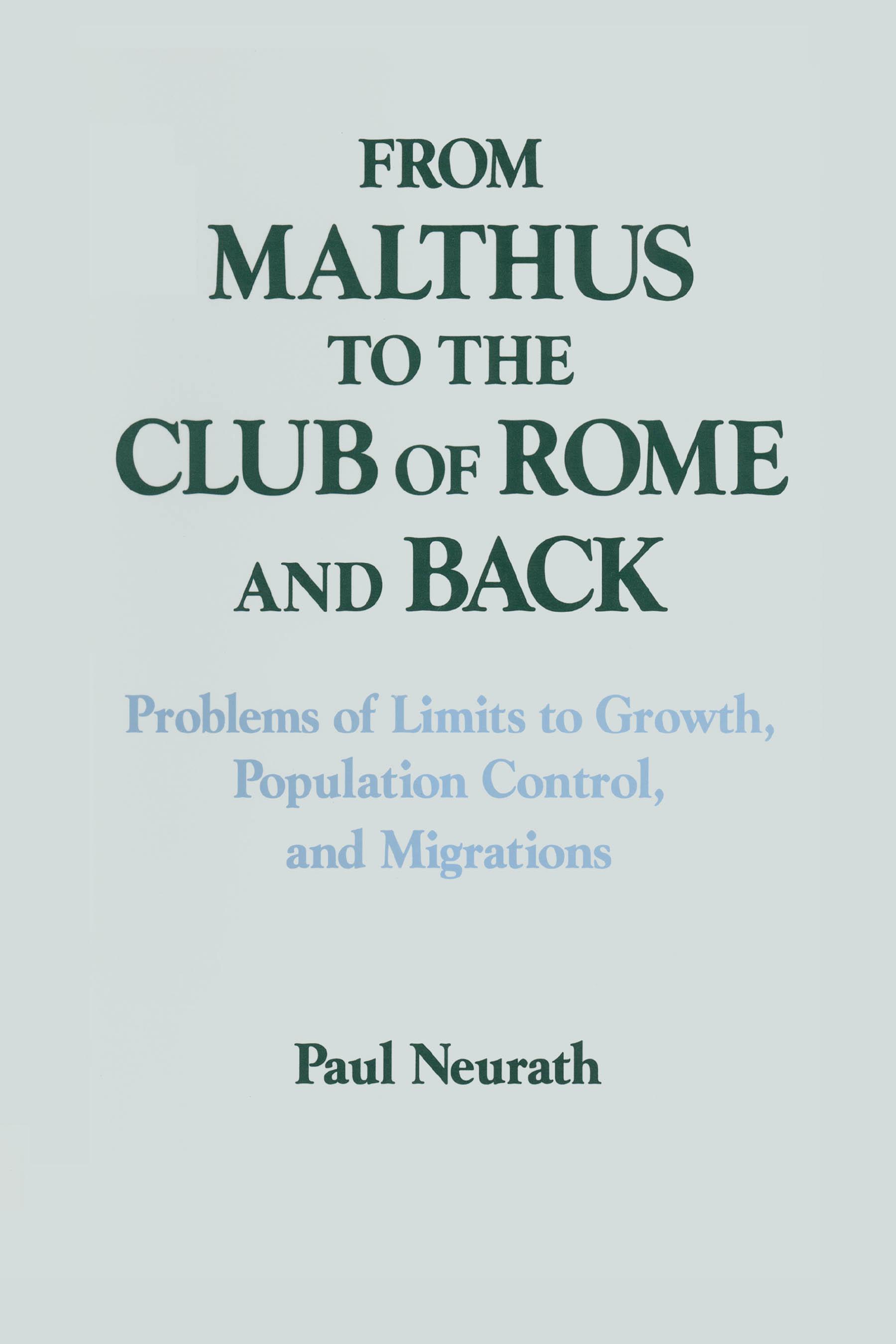
This collection of articles on population growth spans 20 years of the author's thinking and research on a wide range of issues. The book opens with a presentation of the early history of demography before Thomas Malthus wrote his essay on the principles of population (1798) that marked the beginnings of modern demography as a science. The author follows up with a chapter on the estimates made at various times in the past hundred years about the maximum number of people who could live on earth. Four papers deal with the debates about global models of population growth and the limits to growth. Sharp swings in population policy in China from the Communist Revolution under Mao in 1949 to the one child-per-family rule in 1979 are also considered. Another chapter compares population policy in Japan, China and India. A chapter is devoted to the role of oil and the soaring price of this basic input into agriculture as a constraint on food production and, as a result, on population growth. A closing chapter considers the great migrations of the 19th and 20th centuries, including the transatlantic and transpacific movements, the mass migrations after World Wars I and II, and those of recent decades. This book will interest scholars and students in economics and other social sciences dealing with the issues of demography, population growth, and economic development.
Strony: 216
Kategoria: Samhällsvetenskap
e-ISBN: 9781315483351
Waga przesyłki: 1.2 kg
Wysyłka w ciągu: 1-2 dni
Płać wygodnie kartą, Klarną, Apple Pay lub Google Pay. Nie jesteś zadowolony? Zawsze masz 14-dniową gwarancję zwrotu pieniędzy. Więcej przeczytasz w naszych warunkach. Masz pytania? Napisz do nas na hello@memmo.org.
Memmo ułatwia naukę – gdziekolwiek jesteś na świecie. U nas znajdziesz podręczniki i sprytne narzędzia do nauki w jednym miejscu: streszczenia, quizy, podcasty i fiszki. A do tego Ted, Twój kumpel do nauki, który odpowie na wszystko, co Cię nurtuje. Ponad 50 000 studentów już tu się uczy – stworzone, byś uczył się szybciej i mniej stresował.
Może Ci się spodobać
Kup książkę0