
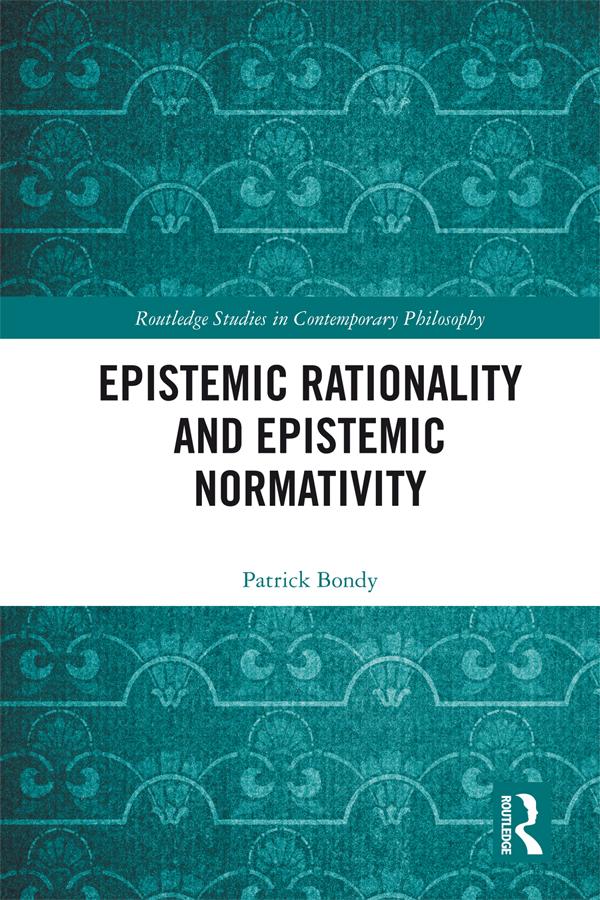
The aim of this book is to answer two important questions about the issue of normativity in epistemology: Why are epistemic reasons evidential and what makes epistemic reasons and rationality normative? Bondy's argument proceeds on the assumption that epistemic rationality goes hand in hand with basing beliefs on good evidence. The opening chapters defend a mental-state ontology of reasons, a deflationary account of how kinds of reasons are distinguished, and a deliberative guidance constraint on normative reasons. They also argue in favor of doxastic voluntarism—the view that beliefs are subject to our direct voluntary control—and embrace the controversial view that voluntarism bears directly on the question of what kinds of things count as reasons for believing. The final three chapters of the book feature a noteworthy critique of the instrumental conception of the nature of epistemic rationality, as well as a defense of the instrumental normativity of epistemic rationality. The final chapter defends the view that epistemic reasons and rationality are normative for us when we have normative reason to get to the truth with respect to some proposition, and it provides a response to the swamping problem for monistic accounts of value.
Płać wygodnie kartą, Klarną, Apple Pay lub Google Pay. Nie jesteś zadowolony? Zawsze masz 14-dniową gwarancję zwrotu pieniędzy. Więcej przeczytasz w naszych warunkach. Masz pytania? Napisz do nas na hello@memmo.org.
Memmo ułatwia naukę – gdziekolwiek jesteś na świecie. U nas znajdziesz podręczniki i sprytne narzędzia do nauki w jednym miejscu: streszczenia, quizy, podcasty i fiszki. A do tego Ted, Twój kumpel do nauki, który odpowie na wszystko, co Cię nurtuje. Ponad 50 000 studentów już tu się uczy – stworzone, byś uczył się szybciej i mniej stresował.