
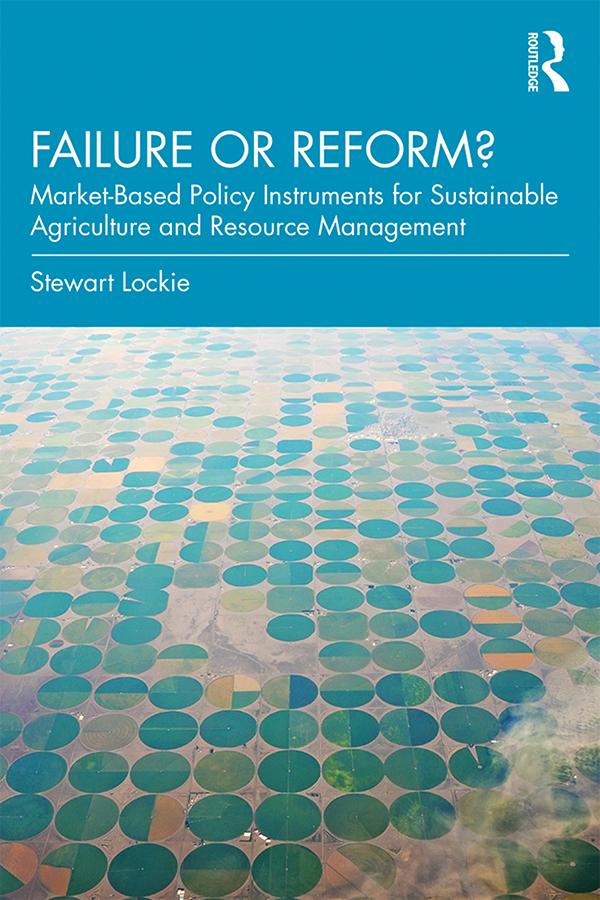
Market reform promises more environmental protection and more profitable agriculture at lower financial cost. Too good to be true? This book examines numerous empirical examples of policy in action to identify principles for the successful application of market-based policy instruments.
Where some market instruments are used to fix market failures by putting a value on environmental protection, others use market-like mechanisms to allocate financial incentives for environmental work. They are promoted as flexible, efficient and politically neutral solutions to the competing demands of social, economic and ecological sustainability. But they also attract criticism for rolling back environmental regulation and privatizing public goods. This book argues that while many market-based instruments have merit, decisions about responsibility cannot be left entirely to the market. Whichever instruments we use, decision-making needs to be embedded in a logic of democratization.
Using case studies from around the world, this book investigates how instruments like eco-standards, payments for ecosystem services, pollution trading and community-based natural resource management perform in practice, and what can be learned about applying them more effectively. While the approach is primarily sociological, it is deliberately written to bridge the gap between sociology, economics, environmental sciences and the concerns of environmental policy makers.
Płać wygodnie kartą, Klarną, Apple Pay lub Google Pay. Nie jesteś zadowolony? Zawsze masz 14-dniową gwarancję zwrotu pieniędzy. Więcej przeczytasz w naszych warunkach. Masz pytania? Napisz do nas na hello@memmo.org.
Memmo ułatwia naukę – gdziekolwiek jesteś na świecie. U nas znajdziesz podręczniki i sprytne narzędzia do nauki w jednym miejscu: streszczenia, quizy, podcasty i fiszki. A do tego Ted, Twój kumpel do nauki, który odpowie na wszystko, co Cię nurtuje. Ponad 50 000 studentów już tu się uczy – stworzone, byś uczył się szybciej i mniej stresował.