
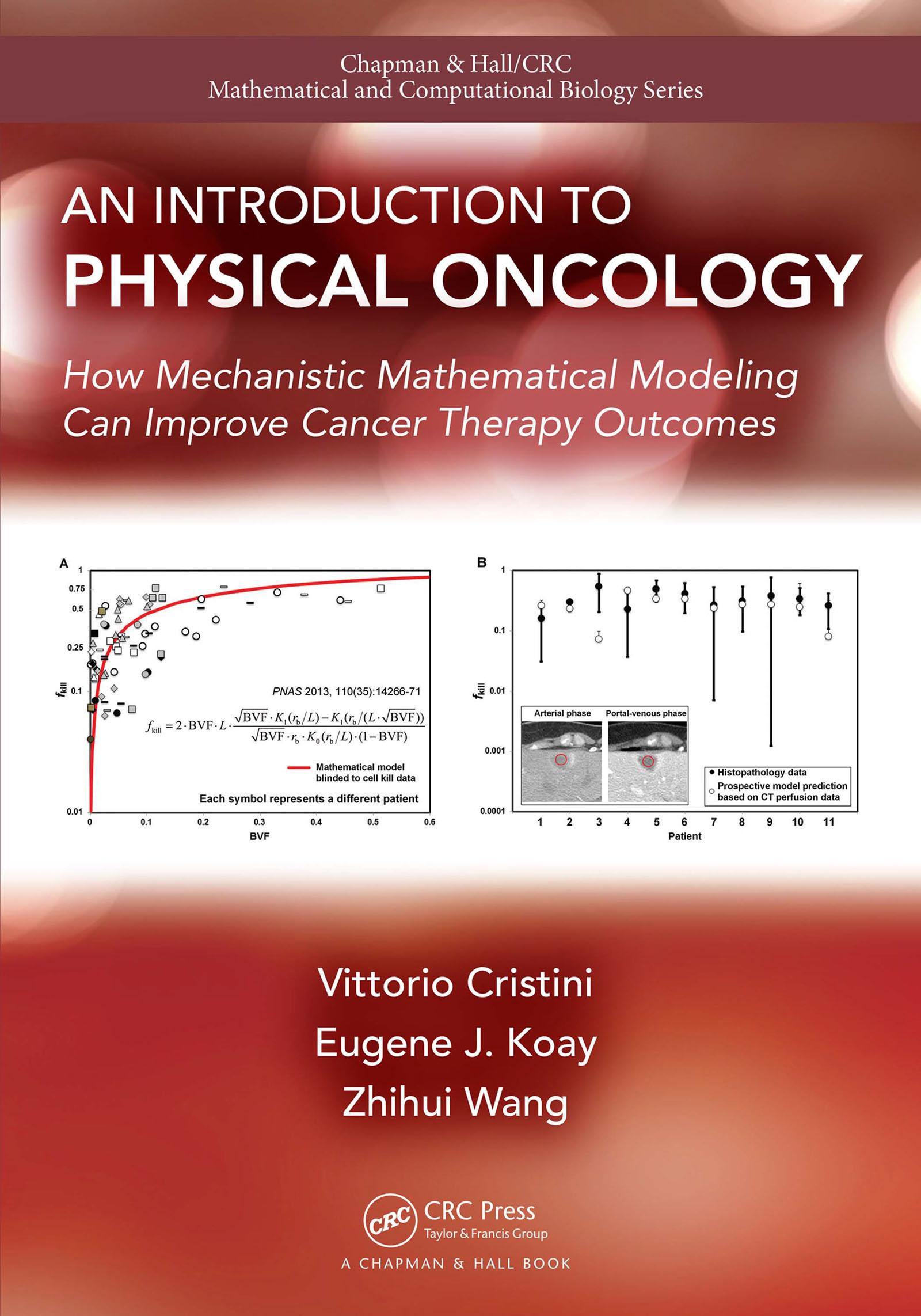
Physical oncology has the potential to revolutionize cancer research and treatment. The fundamental rationale behind this approach is that physical processes, such as transport mechanisms for drug molecules within tissue and forces exchanged by cancer cells with tissue, may play an equally important role as biological processes in influencing progression and treatment outcome.
This book introduces the emerging field of physical oncology to a general audience, with a focus on recent breakthroughs that help in the design and discovery of more effective cancer treatments. It describes how novel mathematical models of physical transport processes incorporate patient tissue and imaging data routinely produced in the clinic to predict the efficacy of many cancer treatment approaches, including chemotherapy and radiation therapy. By helping to identify which therapies would be most beneficial for an individual patient, and quantifying their effects prior to actual implementation in the clinic, physical oncology allows doctors to design treatment regimens customized to each patient’s clinical needs, significantly altering the current clinical approach to cancer treatment and improving the outcomes for patients.
Płać wygodnie kartą, Klarną, Apple Pay lub Google Pay. Nie jesteś zadowolony? Zawsze masz 14-dniową gwarancję zwrotu pieniędzy. Więcej przeczytasz w naszych warunkach. Masz pytania? Napisz do nas na hello@memmo.org.
Memmo ułatwia naukę – gdziekolwiek jesteś na świecie. U nas znajdziesz podręczniki i sprytne narzędzia do nauki w jednym miejscu: streszczenia, quizy, podcasty i fiszki. A do tego Ted, Twój kumpel do nauki, który odpowie na wszystko, co Cię nurtuje. Ponad 50 000 studentów już tu się uczy – stworzone, byś uczył się szybciej i mniej stresował.