
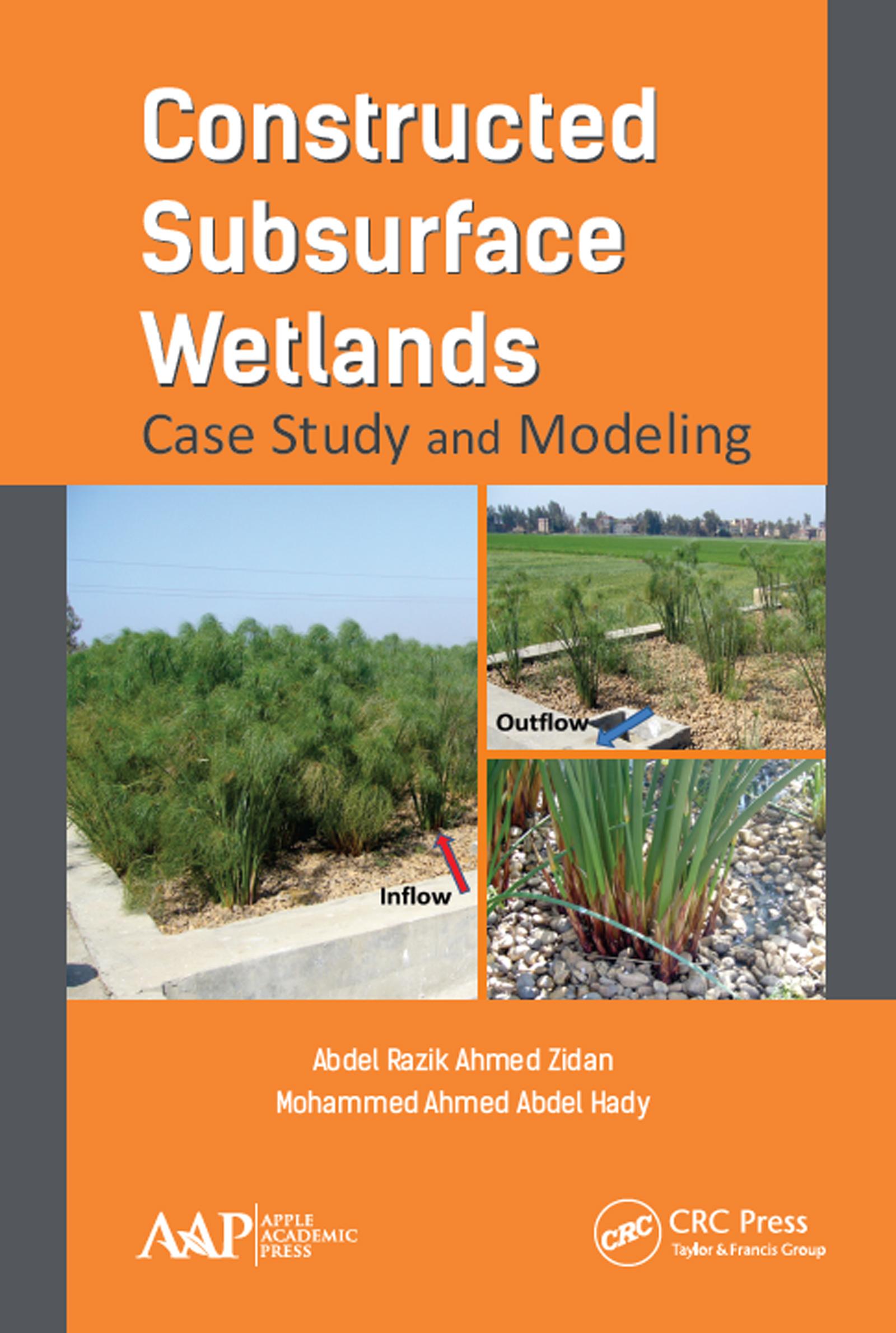
With a sharp focus on environmental pollution and its impact on life and nature, scientists and engineers have studied the water treatment effect of natural wetlands for many years, resulting in the development of constructed wetlands (CWs) for treating wastewater. This informative new book provides current information and guidance on the construction, performance, operation, and maintenance of subsurface flow constructed wetlands of domestic and municipal wastewater.
The focus of the volume is to evaluate the performance of horizontal subsurface flow constructed wetlands in treating domestic wastewater to establish the limit that can be safely discharged to agricultural drains. Two-step procedures were used for the preparation of this book. Using modeling and statistical analyses of treated water samples showed a significant difference between different media for the treatment of most pollutants. The authors went on to design artificial neural network models (ANNs) using Matlab software to simulate some of the experimental data and to anticipate the parameters of output concentration.
The wetland systems have the ability to deal with various pollutants with different concentrations and to decrease the treated water to the standard limits. This volume presents the main role of emergent plants for treatment performance in the constructed wetlands and will be a very important resource for engineers in this field as well as for both undergraduate and graduate students.
Płać wygodnie kartą, Klarną, Apple Pay lub Google Pay. Nie jesteś zadowolony? Zawsze masz 14-dniową gwarancję zwrotu pieniędzy. Więcej przeczytasz w naszych warunkach. Masz pytania? Napisz do nas na hello@memmo.org.
Memmo ułatwia naukę – gdziekolwiek jesteś na świecie. U nas znajdziesz podręczniki i sprytne narzędzia do nauki w jednym miejscu: streszczenia, quizy, podcasty i fiszki. A do tego Ted, Twój kumpel do nauki, który odpowie na wszystko, co Cię nurtuje. Ponad 50 000 studentów już tu się uczy – stworzone, byś uczył się szybciej i mniej stresował.