
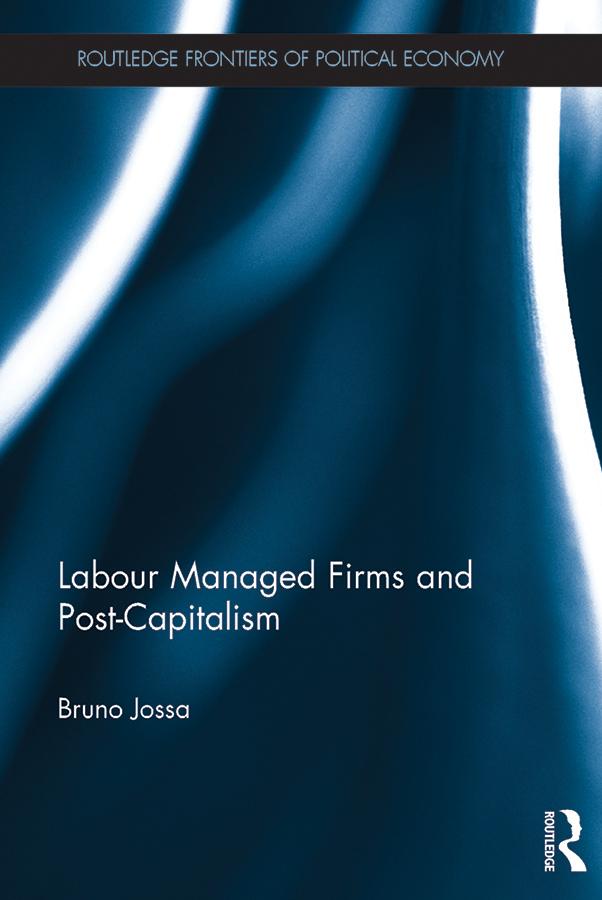
Marx claims that unselfishness is a child of (workplace) culture, whereas the gene is selfish. If Marx is right then the prerequisite for overthrowing capitalism is a system which both leverages selfishness and creates solidarity between workers. This book illustrates and discusses the major points of the economic theory of producer cooperatives, its evolution since the 1950s, and links with Marxian theory.
Labour Managed Firms and Post-Capitalism, most importantly, demonstrates that a system of producer cooperatives offers a wealth of advantages compared to capitalism. There is general agreement that the main benefit of this form of economic democracy is that people who are allowed to freely pursue their interests are happier than those acting on somebody else’s instruction. The author argues that a system of democratic firms would eradicate classical (high-wage) unemployment and scale down both Keynesian and structural unemployment levels. He also shows that a system of producer cooperatives literally reverses the capital-labour relationship typical of capitalism and that its establishment can consequently be looked upon as a revolution.
This volume is of great interest to academics, lecturers and researchers with an interest in Marxism, political economy and industrial economics, as well as economic theory and philosophy.
Płać wygodnie kartą, Klarną, Apple Pay lub Google Pay. Nie jesteś zadowolony? Zawsze masz 14-dniową gwarancję zwrotu pieniędzy. Więcej przeczytasz w naszych warunkach. Masz pytania? Napisz do nas na hello@memmo.org.
Memmo ułatwia naukę – gdziekolwiek jesteś na świecie. U nas znajdziesz podręczniki i sprytne narzędzia do nauki w jednym miejscu: streszczenia, quizy, podcasty i fiszki. A do tego Ted, Twój kumpel do nauki, który odpowie na wszystko, co Cię nurtuje. Ponad 50 000 studentów już tu się uczy – stworzone, byś uczył się szybciej i mniej stresował.