
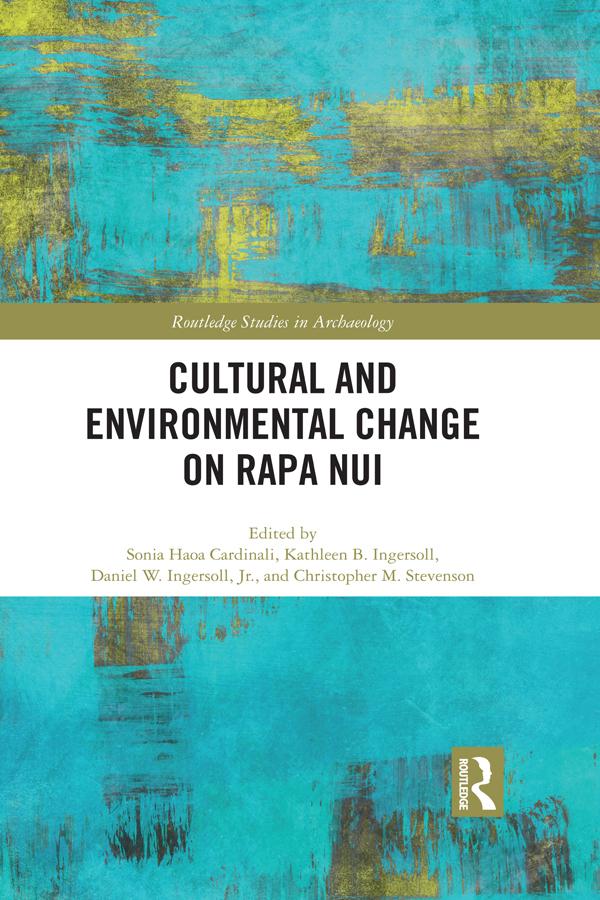
Rapa Nui, one of the world’s most isolated island societies and home to the notable moai, has been at the centre of a tense debate for the past decade. Some see it as the site of a dramatic cultural collapse occurring before Western contact, where a self-inflicted ecocide was brought on by the exhaustion of resources. Others argue that the introduction of Western pathogens and the slave raids of 1862 were to blame for the near extinction of the otherwise resilient Rapa Nui people.
Cultural and Environmental Change on Rapa Nui brings together the latest studies by prominent Rapa Nui researchers from all over the world to explore the island’s past and present, from its discovery by Polynesians, through the first documented contact with Western culture in 1722, to the 20th century. The exiting new volume looks beyond the moai to examine such questions as: was there was a cultural collapse; how did the Rapa Nui react to Westerners; and what responses did the Rapa Nui develop to adjust to naturally- or humanly-induced environmental change?
This volume will appeal to scholars and professionals in the fields of history, archaeology and ecology, as well as anyone with an interest in the challenges of sustainable resource management, and the contentious history of Rapa Nui itself.
Płać wygodnie kartą, Klarną, Apple Pay lub Google Pay. Nie jesteś zadowolony? Zawsze masz 14-dniową gwarancję zwrotu pieniędzy. Więcej przeczytasz w naszych warunkach. Masz pytania? Napisz do nas na hello@memmo.org.
Memmo ułatwia naukę – gdziekolwiek jesteś na świecie. U nas znajdziesz podręczniki i sprytne narzędzia do nauki w jednym miejscu: streszczenia, quizy, podcasty i fiszki. A do tego Ted, Twój kumpel do nauki, który odpowie na wszystko, co Cię nurtuje. Ponad 50 000 studentów już tu się uczy – stworzone, byś uczył się szybciej i mniej stresował.