
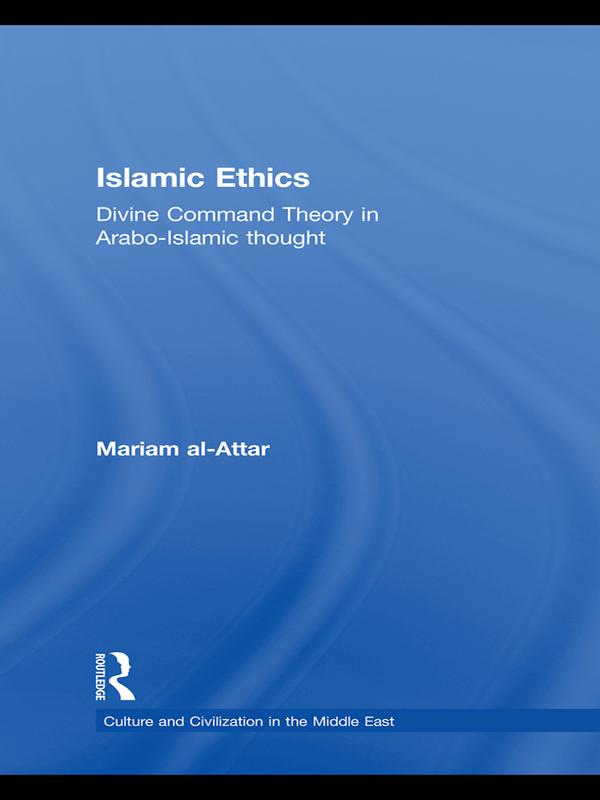
This book explores philosophical ethics in Arabo-Islamic thought. Examining the meaning, origin and development of "Divine Command Theory", it underscores the philosophical bases of religious fundamentalism that hinder social development and hamper dialogue between different cultures and nations.
Challenging traditional stereotypes of Islam, the book refutes contemporary claims that Islam is a defining case of ethical voluntarism, and that the prominent theory in Islamic ethical thought is Divine Command Theory. The author argues that, in fact, early Arab-Islamic scholars articulated moral theories: theories of value and theories of obligation. She traces the development of Arabo-Islamic ethics from the early Islamic theological and political debates between the Kharijites and the Murji’ites, shedding new light on the moral theory of Abd al-Jabbar al-Mu’tazili and the effects of this moral theory on post-Mu’tazilite ethical thought.
Highlighting important aspects in the development of Islamic thought, this book will appeal to students and scholars of Islamic moral thought and ethics, Islamic law, and religious fundamentalism.
Płać wygodnie kartą, Klarną, Apple Pay lub Google Pay. Nie jesteś zadowolony? Zawsze masz 14-dniową gwarancję zwrotu pieniędzy. Więcej przeczytasz w naszych warunkach. Masz pytania? Napisz do nas na hello@memmo.org.
Memmo ułatwia naukę – gdziekolwiek jesteś na świecie. U nas znajdziesz podręczniki i sprytne narzędzia do nauki w jednym miejscu: streszczenia, quizy, podcasty i fiszki. A do tego Ted, Twój kumpel do nauki, który odpowie na wszystko, co Cię nurtuje. Ponad 50 000 studentów już tu się uczy – stworzone, byś uczył się szybciej i mniej stresował.