
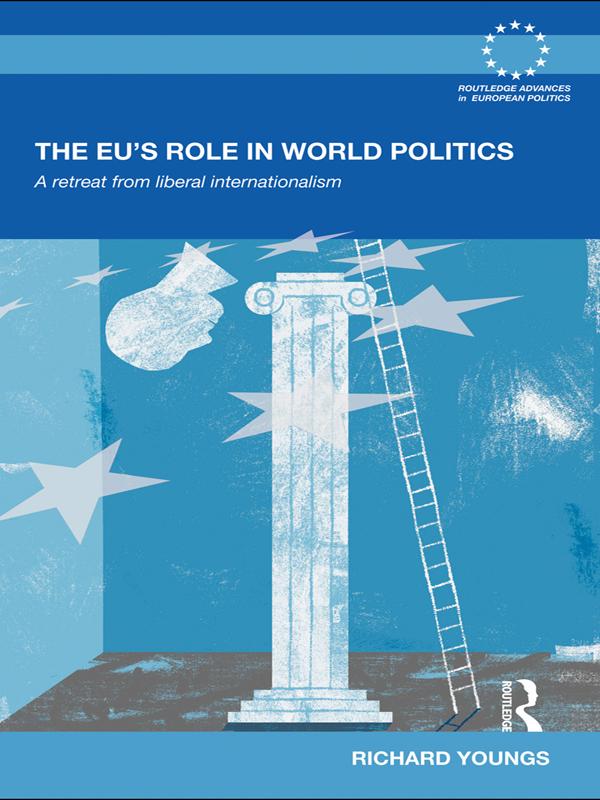
Debates on EU foreign policy have been dominated by two opposing schools of argument. One includes a broad range of work that extols the virtues of a European liberal concept of power and the other sees the EU’s commitment to cosmopolitan liberalism and soft power as a sign of weakness rather than strength.
This book judges the EU on its own terms as a liberal power, examining its policy record, rather than simply asserting that the EU’s liberal commitments in themselves denote either a superior or inferior foreign policy approach. Youngs argues that the challenges facing Europe’s role in the world appear to be in its retreat from liberal internationalism through a series of case studies on policy areas: trade, multilateral diplomacy, security, development cooperation, democracy and human rights, and energy security. Presenting detailed evidence that show the EU is moving away from cosmopolitan strategy, Youngs asserts that Europe needs to reassess its foreign policies if it is to defend the kind of liberal world order necessary for its own and other countries’ long term interests.
This book will be of strong interest to students and scholars of European politics, Foreign Policy and International Relations.
Płać wygodnie kartą, Klarną, Apple Pay lub Google Pay. Nie jesteś zadowolony? Zawsze masz 14-dniową gwarancję zwrotu pieniędzy. Więcej przeczytasz w naszych warunkach. Masz pytania? Napisz do nas na hello@memmo.org.
Memmo ułatwia naukę – gdziekolwiek jesteś na świecie. U nas znajdziesz podręczniki i sprytne narzędzia do nauki w jednym miejscu: streszczenia, quizy, podcasty i fiszki. A do tego Ted, Twój kumpel do nauki, który odpowie na wszystko, co Cię nurtuje. Ponad 50 000 studentów już tu się uczy – stworzone, byś uczył się szybciej i mniej stresował.