
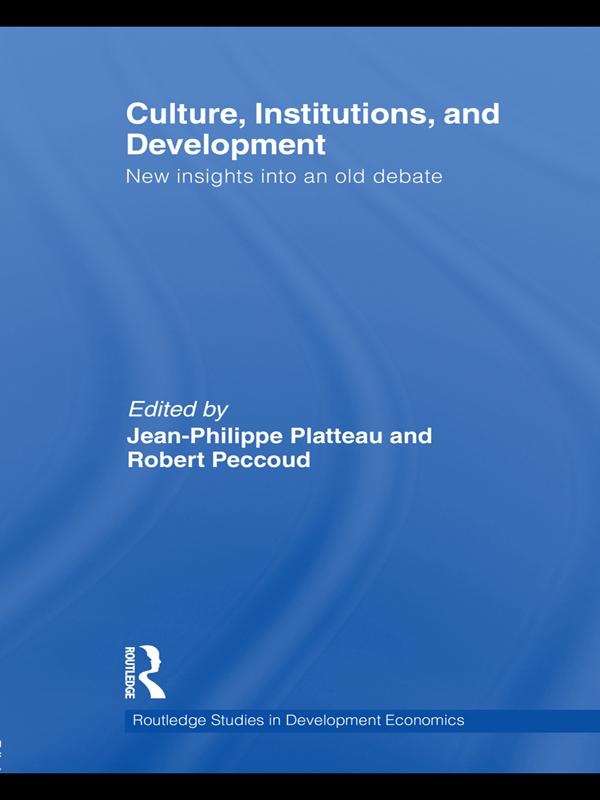
Does culture matter? This question has taken on added significance since fundamentalist revivalism has recently gained ground in different parts of the world. The old controversy between Max Weber and Karl Marx, which centres around the extent to which cultural factors such as social norms and values affect economic growth is of critical importance, particularly because of its policy implications. Indeed, if culture is not an autonomous factor susceptible to influencing economic realities, it should not matter and public authorities can dispense with thinking about cultural interventions. On the other hand, if culture does have a real impact, the question arises as to whether it is conducive or detrimental to economic growth, political liberalization, and the emancipation of individuals among other things.
Culture, Institutions, and Development addresses this debate at a concrete level by looking at five important issues: the role of tradition and its influence on development; the role of religion, with special reference to Middle Eastern countries; the role of family, kinship, and ethnic ties in the process of development; the relationship between culture and entrepreneurship; and the relationship between culture and poverty.
This collection offers a nuanced view that neither denies nor exaggerates the role of cultural factors in explaining relative growth performances across countries. Instead, the contributors focus on the dynamic, two-way relationship between culture and development in a way that stresses policy stakes and the value of multidisciplinary collaboration between economists, historians and other social scientists. This book will be of interest to postgraduates and researchers in all the social sciences, as well as to professionals working in national development agencies, international organisations, and Non-Governmental Organisations.
Płać wygodnie kartą, Klarną, Apple Pay lub Google Pay. Nie jesteś zadowolony? Zawsze masz 14-dniową gwarancję zwrotu pieniędzy. Więcej przeczytasz w naszych warunkach. Masz pytania? Napisz do nas na hello@memmo.org.
Memmo ułatwia naukę – gdziekolwiek jesteś na świecie. U nas znajdziesz podręczniki i sprytne narzędzia do nauki w jednym miejscu: streszczenia, quizy, podcasty i fiszki. A do tego Ted, Twój kumpel do nauki, który odpowie na wszystko, co Cię nurtuje. Ponad 50 000 studentów już tu się uczy – stworzone, byś uczył się szybciej i mniej stresował.