
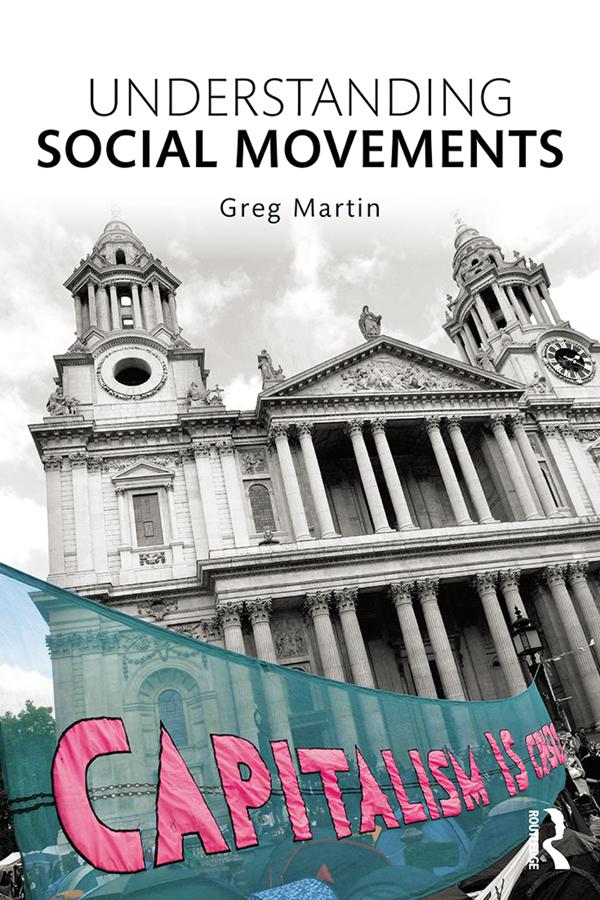
This book offers a new and fresh approach to understanding social movements. It provides interdisciplinary perspectives on social and cultural protest and contentious politics. It considers major theories and concepts, which are presented in an accessible and engaging format. Historical and contemporary case studies and examples from a variety of different countries are provided throughout, including the American civil rights movement, Greenpeace, Pussy Riot, indigenous peoples movements, liberation theology, Occupy, Tea Party, and the Arab Spring.
The book presents specific chapters outlining the early origins of social movement studies, and more recent theoretical and conceptual developments. It considers key ideas from resource mobilization theory, the political process model, and new social movement approaches. It provides an expansive commentary on the role of culture in social protest, and looks at substantive areas in chapters dedicated to religious movements, geography and struggles over space, media and movements, and global activism.
Understanding Social Movements will be a useful resource for undergraduate and postgraduate students across disciplines wanting to be introduced to or extend their knowledge of the field. The book will also prove invaluable for lecturers and academic researchers interested in studying social movements.
Płać wygodnie kartą, Klarną, Apple Pay lub Google Pay. Nie jesteś zadowolony? Zawsze masz 14-dniową gwarancję zwrotu pieniędzy. Więcej przeczytasz w naszych warunkach. Masz pytania? Napisz do nas na hello@memmo.org.
Memmo ułatwia naukę – gdziekolwiek jesteś na świecie. U nas znajdziesz podręczniki i sprytne narzędzia do nauki w jednym miejscu: streszczenia, quizy, podcasty i fiszki. A do tego Ted, Twój kumpel do nauki, który odpowie na wszystko, co Cię nurtuje. Ponad 50 000 studentów już tu się uczy – stworzone, byś uczył się szybciej i mniej stresował.