
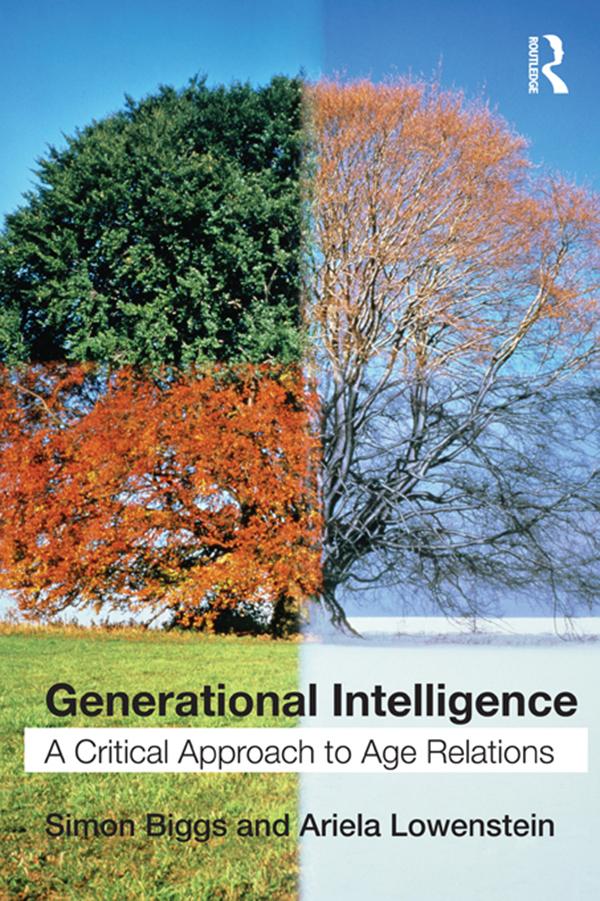
The question of communication and understanding between different generations is emerging as a key issue for the twenty-first century. The advent of ageing populations may lead to increased conflict or solidarity in society, and provokes a profound ambivalence both in public and in the private sphere. In a new approach, Biggs and Lowenstein offer a critical examination of Generational Intelligence as one way of addressing these issues. How easy is it to put yourself in the shoes of someone of a different age group? What are the personal, interpersonal and social factors that affect our perceptions of the ‘age other’? What are the key issues facing families, workplaces and communities in an ageing society? This book sets out a way of thinking about interpersonal relations based on age, and the question of communication between people of different ages and generations. The book challenges existing orthodoxies for relations between adults of different ages and draws out steps that can be taken to increase understanding between generational groups. The authors outline a series of steps that can be taken to enhance Generational Intelligence, examine existing theories and social issues, and suggest new directions for sustainable relations between generational groups.
Płać wygodnie kartą, Klarną, Apple Pay lub Google Pay. Nie jesteś zadowolony? Zawsze masz 14-dniową gwarancję zwrotu pieniędzy. Więcej przeczytasz w naszych warunkach. Masz pytania? Napisz do nas na hello@memmo.org.
Memmo ułatwia naukę – gdziekolwiek jesteś na świecie. U nas znajdziesz podręczniki i sprytne narzędzia do nauki w jednym miejscu: streszczenia, quizy, podcasty i fiszki. A do tego Ted, Twój kumpel do nauki, który odpowie na wszystko, co Cię nurtuje. Ponad 50 000 studentów już tu się uczy – stworzone, byś uczył się szybciej i mniej stresował.