
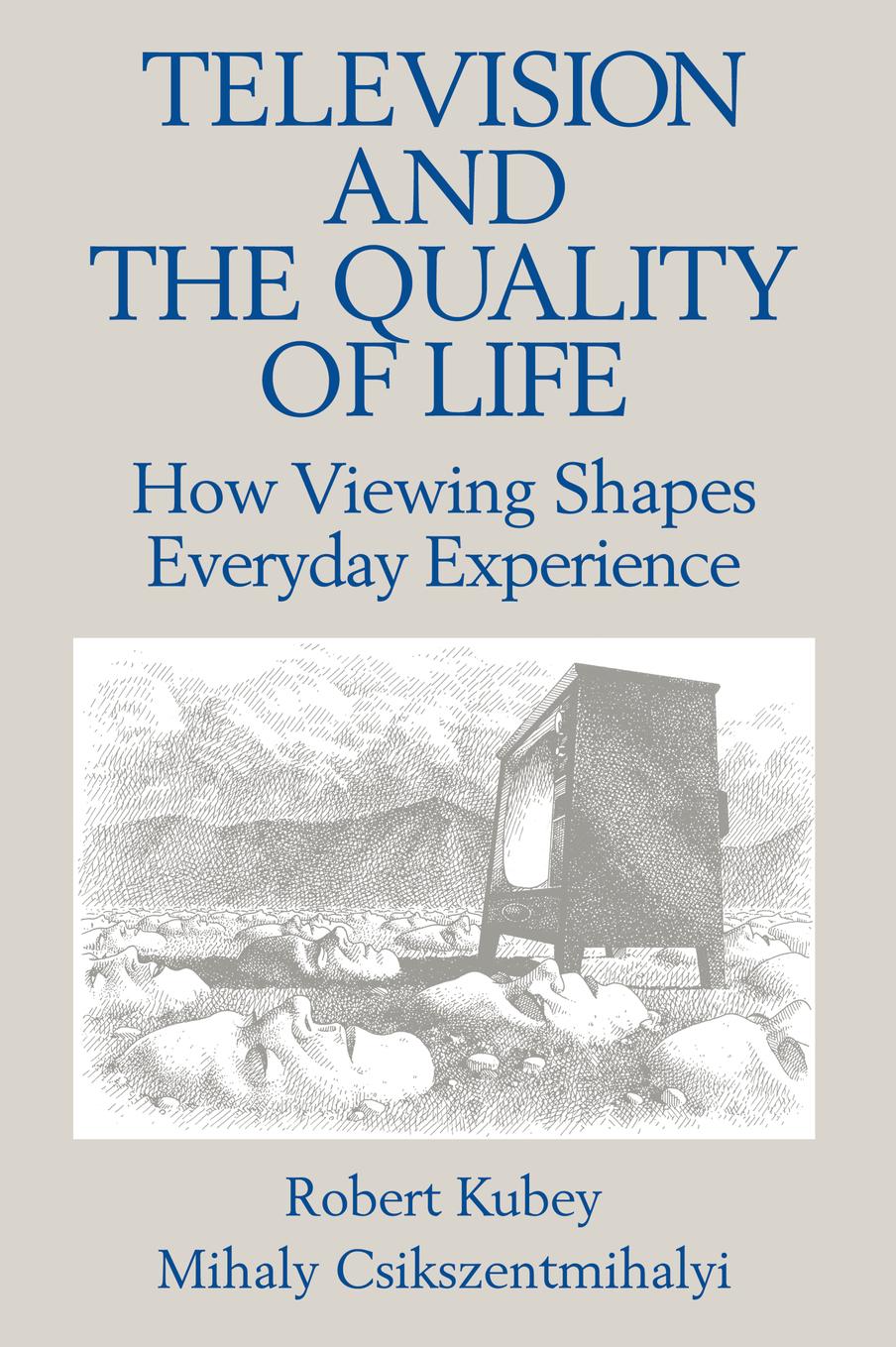
Employing a unique research methodology that enables people to report on their normal activities as they occur, the authors examine how people actually use and experience television -- and how television viewing both contributes to and detracts from the quality of everyday life. Studied within the natural context of everyday living, and drawing comparisons between television viewing and a variety of other daily activities and leisure pursuits, this unusual book explores whether television is a boon or a detriment to family life; how people feel and think before, during, and after television viewing; what causes television habits to develop; and what causes heavy viewing -- and what heavy viewing causes -- in the short and long term.
Television and the Quality of Life also compares the viewing experience cross-nationally using samples from the United States, Italy, Canada, and Germany -- and then interprets the findings within a broad theoretical and historical framework that considers how information use and daily activity contribute to individual, familial, societal, and cultural development.
Płać wygodnie kartą, Klarną, Apple Pay lub Google Pay. Nie jesteś zadowolony? Zawsze masz 14-dniową gwarancję zwrotu pieniędzy. Więcej przeczytasz w naszych warunkach. Masz pytania? Napisz do nas na hello@memmo.org.
Memmo ułatwia naukę – gdziekolwiek jesteś na świecie. U nas znajdziesz podręczniki i sprytne narzędzia do nauki w jednym miejscu: streszczenia, quizy, podcasty i fiszki. A do tego Ted, Twój kumpel do nauki, który odpowie na wszystko, co Cię nurtuje. Ponad 50 000 studentów już tu się uczy – stworzone, byś uczył się szybciej i mniej stresował.