
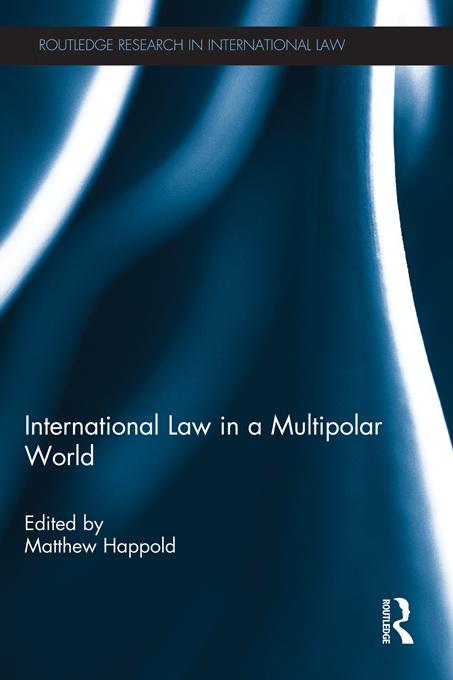
Since the creation of the United Nations in 1945, international law has sought to configure itself as a universal system. Yet, despite the best efforts of international institutions, scholars and others to assert the
universal application of international law, its relevance and applicability has been influenced, if not directed, by political power.Today, the "decline of the West" and ascent of China and India poseparticular challenges for international law and institutions. The international system appears to be moving towards multipolarity, with various sites of power competing to exert influence in the world today.
With contributors from a variety of countries providing perspectives from the disciplines of international law and international relations theory, International Law in a Multipolar World addresses the implications that multipolarity poses for the international legal system. Contributors including Jean d'Aspremont, Jörg Kammerhofer, Alexander Orakhelashvili, Christian Pippan and Nigel White, explore issues such as the use of force, governance and democracy, regionalism and the relevance of the United Nations in a multipolar world, while considering the overarching theme of the relationship between power and law.
International Law in a Multipolar World is of particular interest to academics and students of public international law, international relations theory and international politics.
Płać wygodnie kartą, Klarną, Apple Pay lub Google Pay. Nie jesteś zadowolony? Zawsze masz 14-dniową gwarancję zwrotu pieniędzy. Więcej przeczytasz w naszych warunkach. Masz pytania? Napisz do nas na hello@memmo.org.
Memmo ułatwia naukę – gdziekolwiek jesteś na świecie. U nas znajdziesz podręczniki i sprytne narzędzia do nauki w jednym miejscu: streszczenia, quizy, podcasty i fiszki. A do tego Ted, Twój kumpel do nauki, który odpowie na wszystko, co Cię nurtuje. Ponad 50 000 studentów już tu się uczy – stworzone, byś uczył się szybciej i mniej stresował.