
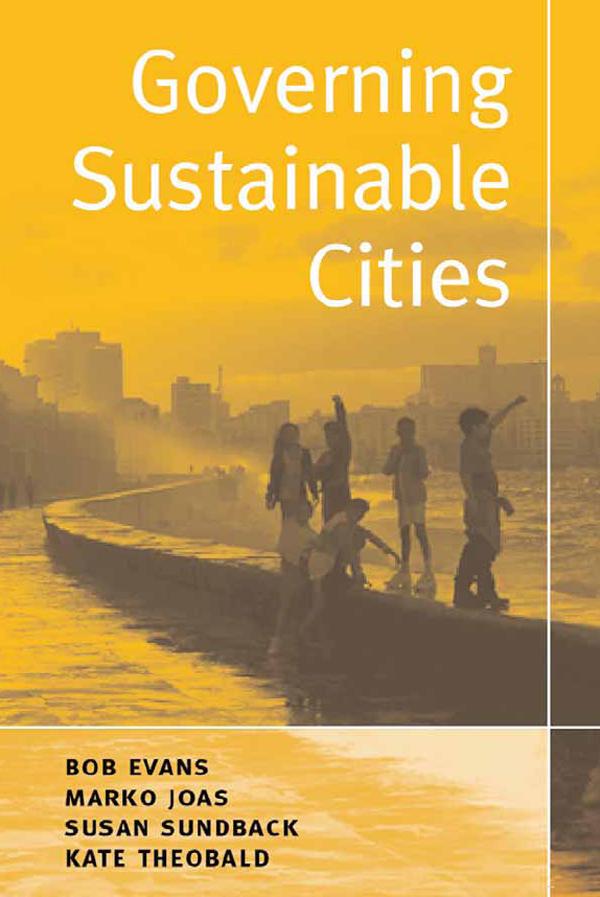
Urban governance and sustainability are rapidly becoming key issues around the world. Currently three billion people - half the population of the planet - live in cities, and by 2050 a full two-thirds of the world's population will be housed in ever larger and increasingly densely populated urban areas. The economic, social and environmental challenges posed by urbanization on such a large scale and at such a rapid pace are staggering for local, regional and national governments working towards sustainability.
Solutions to the myriad problems plaguing the quest for sustainability at the city-level are equally as diverse and complex, but are rooted in the assumptions of the 'sustainability agenda', developed at the Rio Earth Summit and embodied in Local Agenda/Action 21. These assumptions state that good governance is a necessary precondition for the achievement of sustainable development, particularly at the local level, and that the mobilization of local communities is an essential part of this process. Yet until now, these assumptions, which have guided the policies and programmes of over 6000 local authorities around the world, have never been seriously tested.
Drawing on three years of field research in 40 European towns and cities, Governing for Sustainable Cities is the first book to examine empirically the processes of urban governance in sustainable development. Looking at a host of core issues including institutional and social capacity, institutional design, social equity, politics, partnerships and cooperation and creative policy-making, the authors draw compelling conclusions and offer strong guidance. This book is essential reading for policy-makers, politicians, activists and NGOs, planners, researchers and academics, whether in Europe, North America, Australasia or transitional and developing countries, concerned with advancing sustainability in our rapidly urbanizing world.
Płać wygodnie kartą, Klarną, Apple Pay lub Google Pay. Nie jesteś zadowolony? Zawsze masz 14-dniową gwarancję zwrotu pieniędzy. Więcej przeczytasz w naszych warunkach. Masz pytania? Napisz do nas na hello@memmo.org.
Memmo ułatwia naukę – gdziekolwiek jesteś na świecie. U nas znajdziesz podręczniki i sprytne narzędzia do nauki w jednym miejscu: streszczenia, quizy, podcasty i fiszki. A do tego Ted, Twój kumpel do nauki, który odpowie na wszystko, co Cię nurtuje. Ponad 50 000 studentów już tu się uczy – stworzone, byś uczył się szybciej i mniej stresował.