
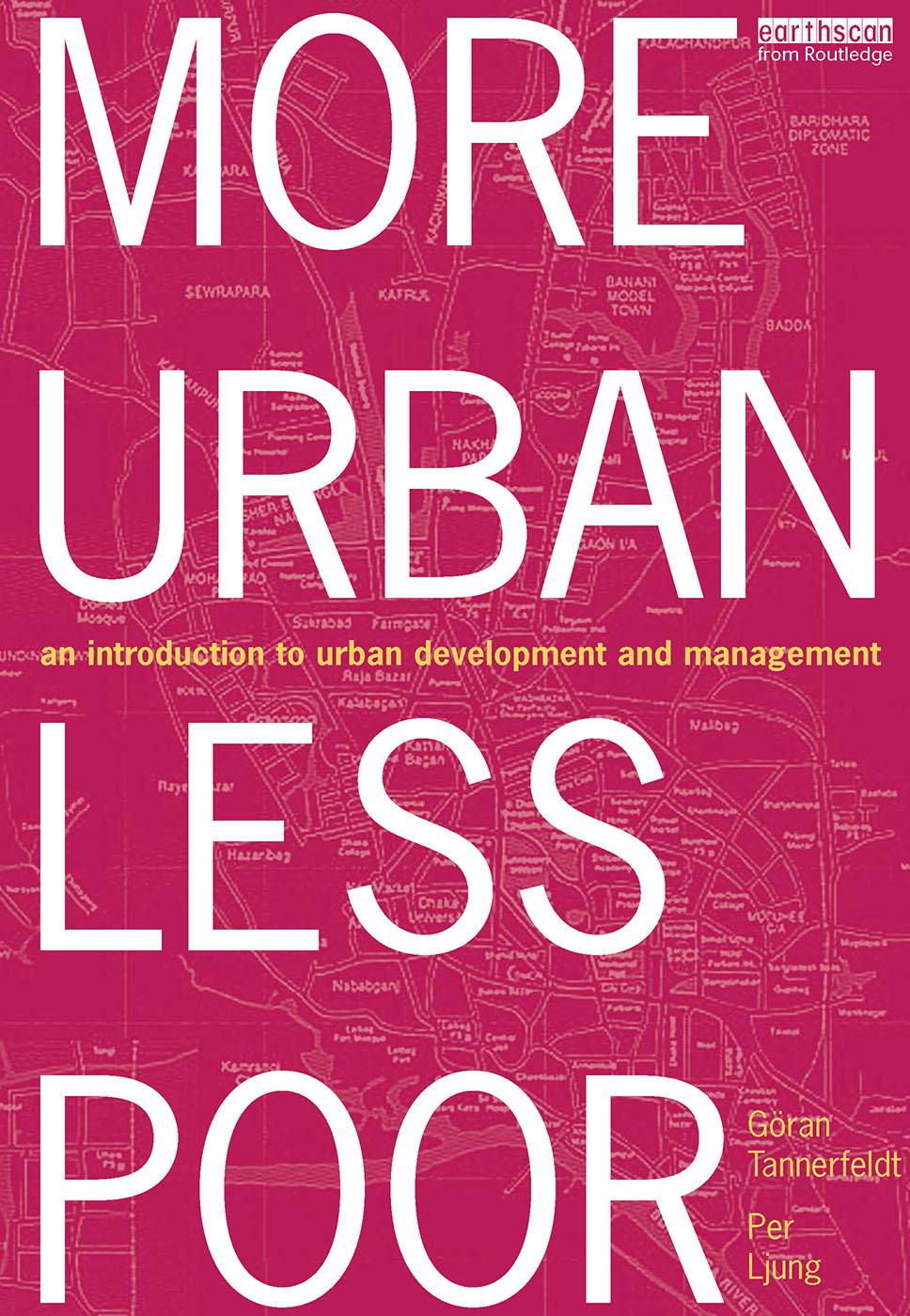
A world more urban...
The world is undergoing massive urbanization, and is projected to increase from three to over four billion city dwellers, mostly in the developing world, within 15 years. This historic shift is producing dramatic effects on human well-being and the environment.
...but less poor
Unplanned shanty-towns without basic services are not an inevitable consequence of urbanization and slums are not explained by poverty alone. Urban misery also stems from misguided policies, inappropriate legal frameworks, dysfunctional markets, poor governance, and not least, lack of political will.
Urbanization and economic development go hand-in-hand and the productivity of the urban economy can and should benefit everyone. Living conditions for the urban poor can be dramatically improved with proper solutions, backed by decisive, concerted action.
More Urban - Less Poor brings order to the complex and important field of urban development in developing and transitional countries. Written in an accessible style, the book examines how cities grow, their economic development, urban poverty, housing and environmental problems. It also examines how to face these challenges through governance and management of urban growth, the finance and delivery of services, and finding a role for development cooperation. This is essential reading for development professionals, researchers, students and others working on any facet of urban development and management in our rapidly urbanizing world.
Published with SIDA
Płać wygodnie kartą, Klarną, Apple Pay lub Google Pay. Nie jesteś zadowolony? Zawsze masz 14-dniową gwarancję zwrotu pieniędzy. Więcej przeczytasz w naszych warunkach. Masz pytania? Napisz do nas na hello@memmo.org.
Memmo ułatwia naukę – gdziekolwiek jesteś na świecie. U nas znajdziesz podręczniki i sprytne narzędzia do nauki w jednym miejscu: streszczenia, quizy, podcasty i fiszki. A do tego Ted, Twój kumpel do nauki, który odpowie na wszystko, co Cię nurtuje. Ponad 50 000 studentów już tu się uczy – stworzone, byś uczył się szybciej i mniej stresował.