
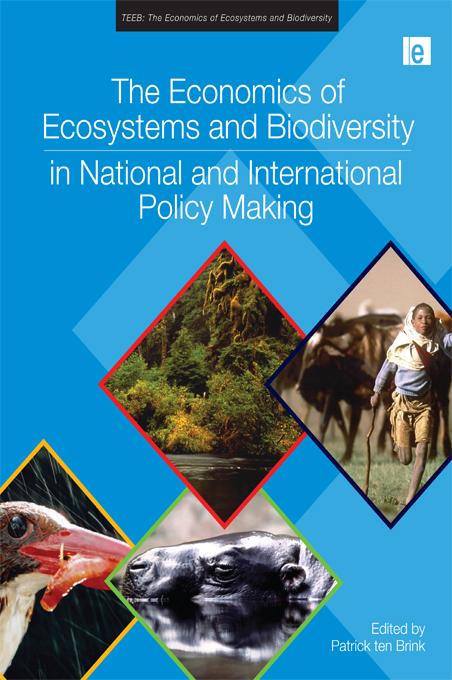
The Economics of Ecosystems and Biodiversity (TEEB) study is a major international initiative drawing attention to local, national and global economic benefits of biodiversity, to highlight the growing costs of biodiversity loss and ecosystem degradation, the benefits of investing in natural capital, and to draw together expertise from the fields of science, economics and policy to enable practical actions. Drawing on a team of more than one hundred authors and reviewers, this book demonstrates the value of ecosystems and biodiversity to the economy, society and individuals. It underlines the urgency of strategic policy making and action at national and international levels, and presents a rich evidence base of policies and instruments in use around the world and a wide range of innovative solutions.
It highlights the need for new public policy to reflect the appreciation that public goods and social benefits are often overlooked and that we need a transition to decision making which integrates the many values of nature across policy sectors. It explores the range of instruments to reward those offering ecosystem service benefits, such as water provision and climate regulation. It looks at fiscal and regulatory instruments to reduce the incentives of those running down our natural capital, and at reforming subsidies such that they respond to current and future priorities.
The authors also consider two major areas of investment in natural capital - protected areas and investment in restoration. Overall the book underlines the needs and ways to transform our approach to natural capital, and demonstrates how we can practically take into account the value of ecosystems and biodiversity in policy decisions - at national and international levels - to promote the protection of our environment and contribute to a sustainable economy and to the wellbeing of societies.
Płać wygodnie kartą, Klarną, Apple Pay lub Google Pay. Nie jesteś zadowolony? Zawsze masz 14-dniową gwarancję zwrotu pieniędzy. Więcej przeczytasz w naszych warunkach. Masz pytania? Napisz do nas na hello@memmo.org.
Memmo ułatwia naukę – gdziekolwiek jesteś na świecie. U nas znajdziesz podręczniki i sprytne narzędzia do nauki w jednym miejscu: streszczenia, quizy, podcasty i fiszki. A do tego Ted, Twój kumpel do nauki, który odpowie na wszystko, co Cię nurtuje. Ponad 50 000 studentów już tu się uczy – stworzone, byś uczył się szybciej i mniej stresował.