
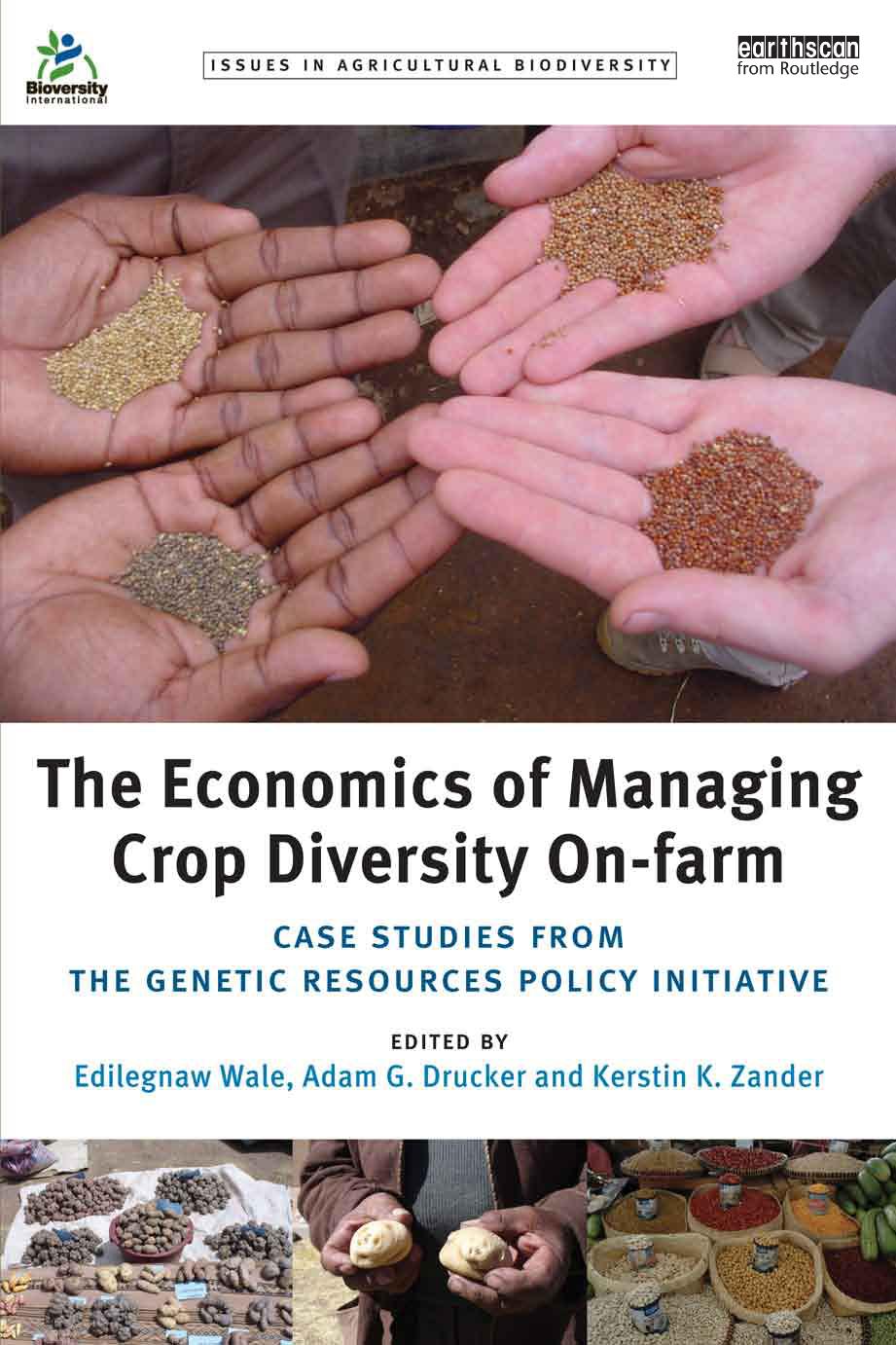
The purpose of this book is to assess a variety of economic issues as they relate to agro-biodiversity and show how addressing these issues can assist in agro-biodiversity policy-making. This is illustrated using empirical data from some of the countries (Ethiopia, Nepal and Zambia) which are part of the Genetic Resources Policy Initiative. The empirical chapters apply the relevant economic methods, including regression analysis, choice experiments, hedonic pricing, contingent valuation and farm business income analysis.
The authors discuss the economics of managing crop diversity on-farm in the context of crop variety attribute preferences, farmers' perception of agro-biodiversity loss, and value addition and marketing of the products of traditional crop varieties. The case studies include detailed analysis of traditional varieties of groundnut, maize, rice, sorghum, and teff. The results are relevant not only to GRPI countries but also to other countries concerned with the sustainable utilization of these resources. Overall, the studies illustrate how genetic resources issues can be integrated into rural development interventions.
Płać wygodnie kartą, Klarną, Apple Pay lub Google Pay. Nie jesteś zadowolony? Zawsze masz 14-dniową gwarancję zwrotu pieniędzy. Więcej przeczytasz w naszych warunkach. Masz pytania? Napisz do nas na hello@memmo.org.
Memmo ułatwia naukę – gdziekolwiek jesteś na świecie. U nas znajdziesz podręczniki i sprytne narzędzia do nauki w jednym miejscu: streszczenia, quizy, podcasty i fiszki. A do tego Ted, Twój kumpel do nauki, który odpowie na wszystko, co Cię nurtuje. Ponad 50 000 studentów już tu się uczy – stworzone, byś uczył się szybciej i mniej stresował.