
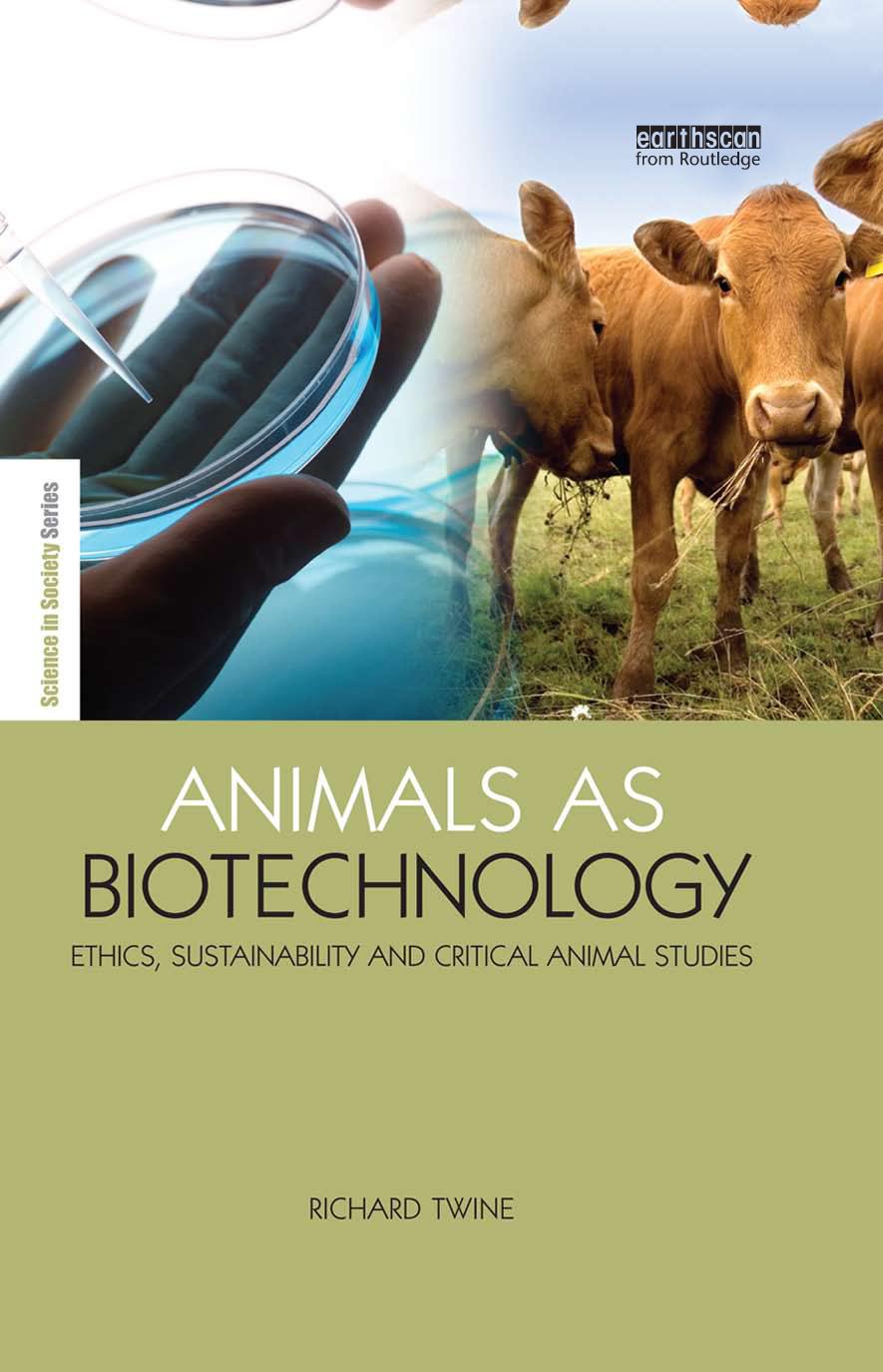
In Animals as Biotechnology sociologist Richard Twine places the question of human/animal relations at the heart of sustainability and climate change debates. The book is shaped by the emergence of two contradictory trends within our approach to nonhuman animals: the biotechnological turn in animal sciences, which aims to increase the efficiency and profitability of meat and dairy production; and the emerging field of critical animal studies - mostly in the humanities and social sciences - which works to question the nature of our relations with other animals.
The first part of the book focuses on ethics, examining critically the dominant paradigms of bioethics and power relations between human and non-human. The second part considers animal biotechnology and political economy, examining commercialisation and regulation. The final part of the book centres on discussions of sustainability, limits and an examination of the prospects for animal ethics if biotechnology becomes part of the dominant agricultural paradigm. Twine concludes by considering whether growing calls to reduce our consumption of meat/dairy products in the face of climate change threats are in fact complicit with an anthropocentric understanding of sustainability and that what is needed is a more fundamental ethical and political questioning of relations and distinctions between humans, animals and nature.
Płać wygodnie kartą, Klarną, Apple Pay lub Google Pay. Nie jesteś zadowolony? Zawsze masz 14-dniową gwarancję zwrotu pieniędzy. Więcej przeczytasz w naszych warunkach. Masz pytania? Napisz do nas na hello@memmo.org.
Memmo ułatwia naukę – gdziekolwiek jesteś na świecie. U nas znajdziesz podręczniki i sprytne narzędzia do nauki w jednym miejscu: streszczenia, quizy, podcasty i fiszki. A do tego Ted, Twój kumpel do nauki, który odpowie na wszystko, co Cię nurtuje. Ponad 50 000 studentów już tu się uczy – stworzone, byś uczył się szybciej i mniej stresował.