
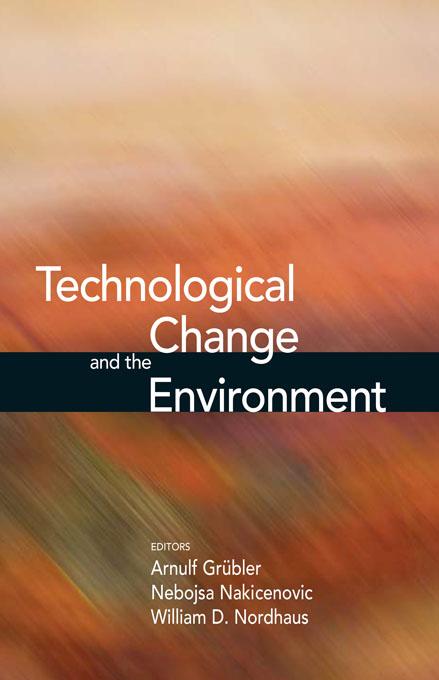
Much is written in the popular literature about the current pace of technological change. But do we have enough scientific knowledge about the sources and management of innovation to properly inform policymaking in technology dependent domains such as energy and the environment? While it is agreed that technological change does not 'fall from heaven like autumn leaves,' the theory, data, and models are deficient. The specific mechanisms that govern the rate and direction of inventive activity, the drivers and scope for incremental improvements that occur during technology diffusion, and the spillover effects that cross-fertilize technological innovations remain poorly understood.
In a work that will interest serious readers of history, policy, and economics, the editors and their distinguished contributors offer a unique, single volume overview of the theoretical and empirical work on technological change. Beginning with a survey of existing research, they provide analysis and case studies in contexts such as medicine, agriculture, and power generation, paying particular attention to what technological change means for efficiency, productivity, and reduced environmental impacts. The book includes a historical analysis of technological change, an examination of the overall direction of technological change, and general theories about the sources of change. The contributors empirically test hypotheses of induced innovation and theories of institutional innovation. They propose ways to model induced technological change and evaluate its impact, and they consider issues such as uncertainty in technology returns, technology crossover effects, and clustering. A copublication o Resources for the Future (RFF) and the International Institute for Applied Systems Analysis (IIASA).
Płać wygodnie kartą, Klarną, Apple Pay lub Google Pay. Nie jesteś zadowolony? Zawsze masz 14-dniową gwarancję zwrotu pieniędzy. Więcej przeczytasz w naszych warunkach. Masz pytania? Napisz do nas na hello@memmo.org.
Memmo ułatwia naukę – gdziekolwiek jesteś na świecie. U nas znajdziesz podręczniki i sprytne narzędzia do nauki w jednym miejscu: streszczenia, quizy, podcasty i fiszki. A do tego Ted, Twój kumpel do nauki, który odpowie na wszystko, co Cię nurtuje. Ponad 50 000 studentów już tu się uczy – stworzone, byś uczył się szybciej i mniej stresował.