
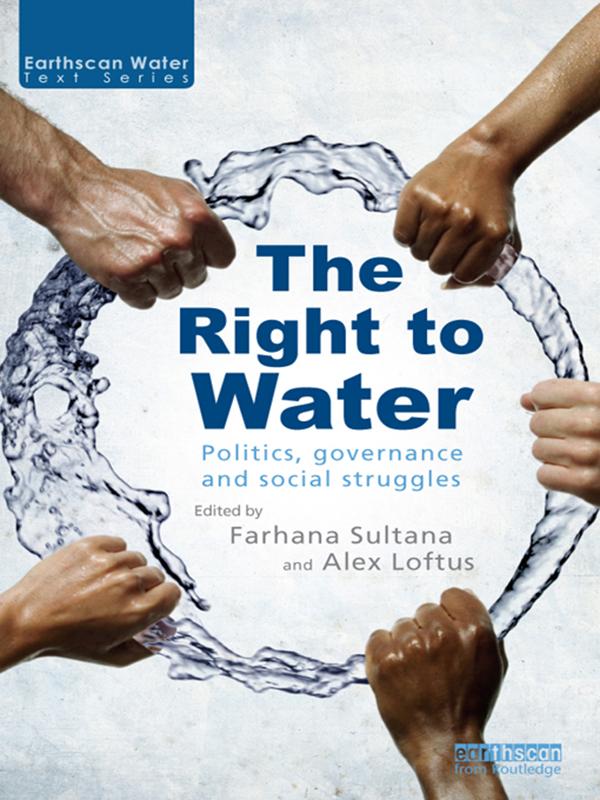
The right to clean water has been adopted by the United Nations as a basic human right. Yet how such universal calls for a right to water are understood, negotiated, experienced and struggled over remain key challenges. The Right to Water elucidates how universal calls for rights articulate with local historical geographical contexts, governance, politics and social struggles, thereby highlighting the challenges and the possibilities that exist. Bringing together a unique range of academics, policy-makers and activists, the book analyzes how struggles for the right to water have attempted to translate moral arguments over access to safe water into workable claims. This book is an intervention at a crucial moment into the shape and future direction of struggles for the right to water in a range of political, geographic and socio-economics contexts, seeking to be pro-active in defining what this struggle could mean and how it might be taken forward in a far broader transformative politics.
The Right to Water engages with a range of approaches that focus on philosophical, legal and governance perspectives before seeking to apply these more abstract arguments to an array of concrete struggles and case studies. In so doing, the book builds on empirical examples from Africa, Asia, Oceania, Latin America, the Middle East, North America and the European Union.
Płać wygodnie kartą, Klarną, Apple Pay lub Google Pay. Nie jesteś zadowolony? Zawsze masz 14-dniową gwarancję zwrotu pieniędzy. Więcej przeczytasz w naszych warunkach. Masz pytania? Napisz do nas na hello@memmo.org.
Memmo ułatwia naukę – gdziekolwiek jesteś na świecie. U nas znajdziesz podręczniki i sprytne narzędzia do nauki w jednym miejscu: streszczenia, quizy, podcasty i fiszki. A do tego Ted, Twój kumpel do nauki, który odpowie na wszystko, co Cię nurtuje. Ponad 50 000 studentów już tu się uczy – stworzone, byś uczył się szybciej i mniej stresował.