
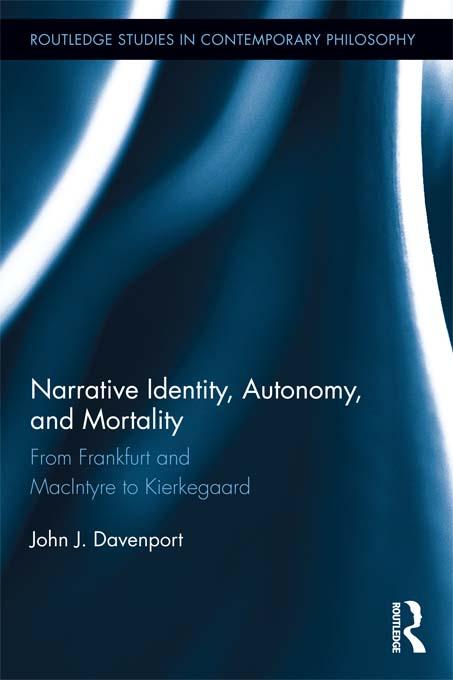
In the last two decades, interest in narrative conceptions of identity has grown exponentially, though there is little agreement about what a "life-narrative" might be. In connecting Kierkegaard with virtue ethics, several scholars have recently argued that narrative models of selves and MacIntyre's concept of the unity of a life help make sense of Kierkegaard's existential stages and, in particular, explain the transition from "aesthetic" to "ethical" modes of life. But others have recently raised difficult questions both for these readings of Kierkegaard and for narrative accounts of identity that draw on the work of MacIntyre in general. While some of these objections concern a strong kind of unity or "wholeheartedness" among an agent's long-term goals or cares, the fundamental objection raised by critics is that personal identity cannot be a narrative, since stories are artifacts made by persons. In this book, Davenport defends the narrative approach to practical identity and autonomy in general, and to Kierkegaard's stages in particular.
Płać wygodnie kartą, Klarną, Apple Pay lub Google Pay. Nie jesteś zadowolony? Zawsze masz 14-dniową gwarancję zwrotu pieniędzy. Więcej przeczytasz w naszych warunkach. Masz pytania? Napisz do nas na hello@memmo.org.
Memmo ułatwia naukę – gdziekolwiek jesteś na świecie. U nas znajdziesz podręczniki i sprytne narzędzia do nauki w jednym miejscu: streszczenia, quizy, podcasty i fiszki. A do tego Ted, Twój kumpel do nauki, który odpowie na wszystko, co Cię nurtuje. Ponad 50 000 studentów już tu się uczy – stworzone, byś uczył się szybciej i mniej stresował.