
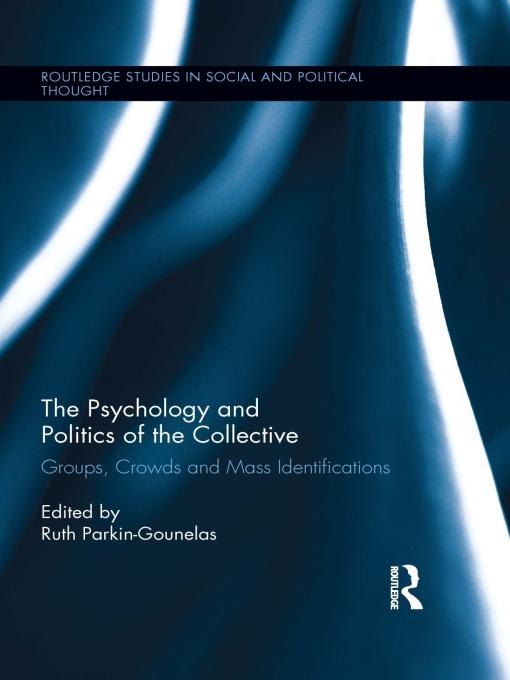
What are the psychological factors in operation when we form groups or crowds, and how are these affected by socio-historical circumstances? History offers endless examples of different forms of human collectivity, both private and public, small-scale and large: from the primal horde to the modern nuclear family, from the Athenian polis to virtual internet communities. Within the context of shifting social bonds in global culture, this book brings together debates on the left from political philosophy, psychoanalysis, social psychology and media and cultural studies to explore the logic of the formation of collective identities from a new theoretical perspective. Challenging liberal-capitalist models of individualism, as well as postmodern identity politics, analysts here turn to Continental philosophy (Lacan, Derrida, Agamben, Laclau, Badiou, among others) in order to re-think collectivity in relation to questions of agency, alterity, affect, sovereignty, the national imaginary and the biopolitical. In the aftermath of the great mass movements of the twentieth century (Marxist-Leninism, Mao), which resulted in bureaucratic submission and the cult of the State, the fate of our collective identity today raises urgent questions about the future of collaborative activity, the role of mediating institutions in shaping mass psychology, what is at stake in a radical democracy, and what happens in a crowd.
Płać wygodnie kartą, Klarną, Apple Pay lub Google Pay. Nie jesteś zadowolony? Zawsze masz 14-dniową gwarancję zwrotu pieniędzy. Więcej przeczytasz w naszych warunkach. Masz pytania? Napisz do nas na hello@memmo.org.
Memmo ułatwia naukę – gdziekolwiek jesteś na świecie. U nas znajdziesz podręczniki i sprytne narzędzia do nauki w jednym miejscu: streszczenia, quizy, podcasty i fiszki. A do tego Ted, Twój kumpel do nauki, który odpowie na wszystko, co Cię nurtuje. Ponad 50 000 studentów już tu się uczy – stworzone, byś uczył się szybciej i mniej stresował.