
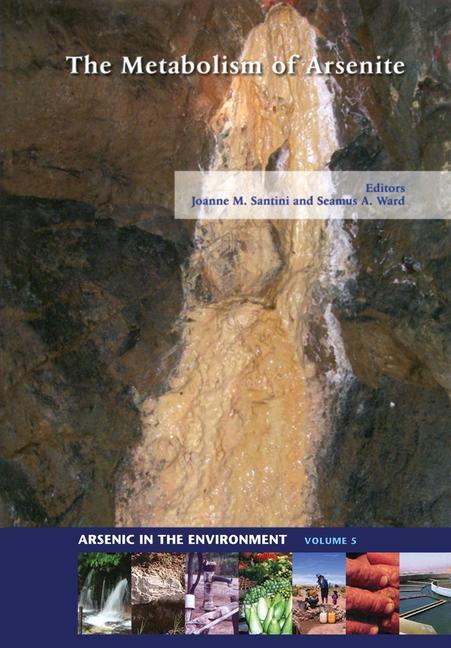
Up to 200 million people in 70 countries are at risk from drinking water contaminated with arsenic, which is a major cause of chronic debilitating illnesses and fatal cancers. Until recently little was known about the mobility of arsenic, and how redox transformations determined its movement into or out of water supplies. Although human activities contribute to the release of arsenic from minerals, it is now clear that bacteria are responsible for most of the redox transformation of arsenic in the environment. Bacterial oxidation of arsenite (to the less mobile arsenate) has been known since 1918, but it was not until 2000 that a bacterium was shown to gain energy from this process. Since then a wide range of arsenite-oxidizing bacteria have been isolated, including aerobes and anaerobes; heterotrophs and autotrophs; thermophiles, mesophiles and psychrophiles. This book reviews recent advances in the study of such bacteria. After a section on background—geology and health issues—the main body of the book concerns the cellular machinery of arsenite oxidation. It concludes by examining possible applications. Topics treated are:
- The geology and cycling of arsenic
- Arsenic and disease
- Arsenite oxidation: physiology, enzymes, genes, and gene regulation.
- Community genomics and functioning, and the evolution of arsenite oxidation
- Microbial arsenite oxidation in bioremediation
- Biosensors for arsenic in drinking water and industrial effluents
Płać wygodnie kartą, Klarną, Apple Pay lub Google Pay. Nie jesteś zadowolony? Zawsze masz 14-dniową gwarancję zwrotu pieniędzy. Więcej przeczytasz w naszych warunkach. Masz pytania? Napisz do nas na hello@memmo.org.
Memmo ułatwia naukę – gdziekolwiek jesteś na świecie. U nas znajdziesz podręczniki i sprytne narzędzia do nauki w jednym miejscu: streszczenia, quizy, podcasty i fiszki. A do tego Ted, Twój kumpel do nauki, który odpowie na wszystko, co Cię nurtuje. Ponad 50 000 studentów już tu się uczy – stworzone, byś uczył się szybciej i mniej stresował.