
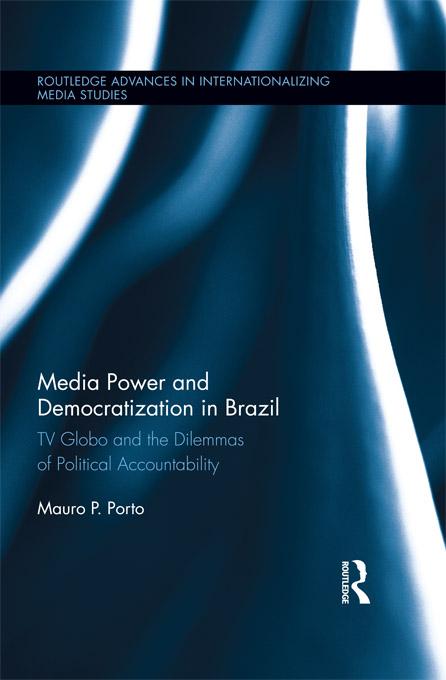
In this book, Porto analyzes the role of TV Globo in the democratization of Brazil. TV Globo, one of the world's largest media conglomerates, has a dominant position in Brazil's communications landscape. It also exports telenovelas to more than 130 countries and has established joint ventures with transnational media conglomerates. Beginning in the mid-1990s, TV Globo began a process of "opening," replacing its authoritarian model of journalism with a more independent reporting style. Representations of Brazil in prime time telenovelas have also shifted. Given this shift, Porto considers some of the following questions:
•What explains these changes in Brazil's most powerful media company?
•How are they related to processes of political and social democratization?
•How did TV Globo's opening affect Brazil's emerging democracy, especially in terms of the quality of political accountability mechanisms?
Porto uses the Brazilian case of TV Globo to analyze the larger links between democratization, civil society mobilization, and media change in transitional societies.
Płać wygodnie kartą, Klarną, Apple Pay lub Google Pay. Nie jesteś zadowolony? Zawsze masz 14-dniową gwarancję zwrotu pieniędzy. Więcej przeczytasz w naszych warunkach. Masz pytania? Napisz do nas na hello@memmo.org.
Memmo ułatwia naukę – gdziekolwiek jesteś na świecie. U nas znajdziesz podręczniki i sprytne narzędzia do nauki w jednym miejscu: streszczenia, quizy, podcasty i fiszki. A do tego Ted, Twój kumpel do nauki, który odpowie na wszystko, co Cię nurtuje. Ponad 50 000 studentów już tu się uczy – stworzone, byś uczył się szybciej i mniej stresował.