
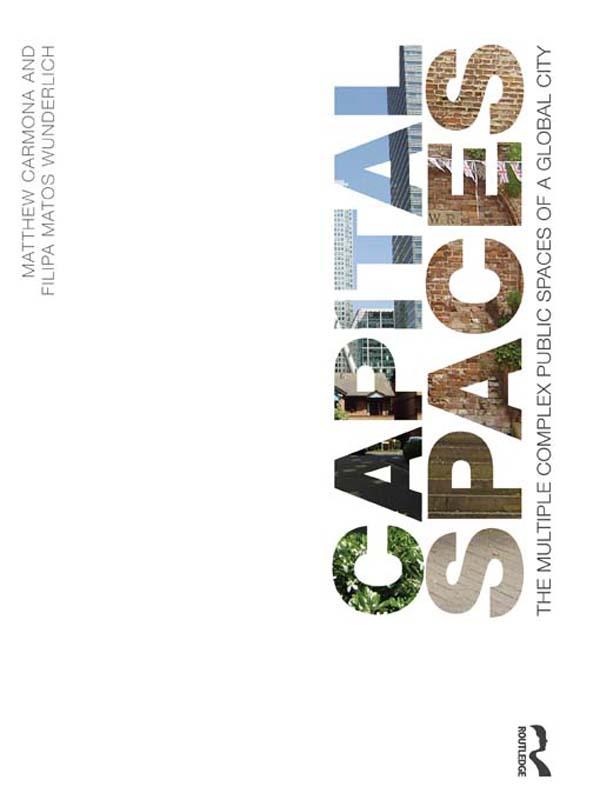
In recent years it has become common-place to hear claims that public space in cities across the globe has become the exclusive preserve of the wealthy and privileged, at the expense of the needs of wider society. Whether it is the privatization of public space through commerical developments like shopping malls and business parks, the gentrification of existing spaces by campaigns against perceived anti-social behaviour or the increasing domination of public areas by private transport in the form of the car, the urban public space is seen as under threat.
But are things really that bad? Has the market really become the sole factor that influences the treatment of public space? Have the financial and personal interests of the few really come to dominate those of the many?
To answer these questions Matthew Carmona and Filipa Wunderlich have carried out a detailed investigation of the modern public spaces of London, that most global of cities. They have developed a new typology of public spaces applicable to all cities, a typology that demonstrates that to properly assess contemporary urban places means challenging the over-simplification of current critiques. Global cities are made up of many overlapping public spaces, good and bad; this book shows how to analyze this complexity, and to understand it.
Płać wygodnie kartą, Klarną, Apple Pay lub Google Pay. Nie jesteś zadowolony? Zawsze masz 14-dniową gwarancję zwrotu pieniędzy. Więcej przeczytasz w naszych warunkach. Masz pytania? Napisz do nas na hello@memmo.org.
Memmo ułatwia naukę – gdziekolwiek jesteś na świecie. U nas znajdziesz podręczniki i sprytne narzędzia do nauki w jednym miejscu: streszczenia, quizy, podcasty i fiszki. A do tego Ted, Twój kumpel do nauki, który odpowie na wszystko, co Cię nurtuje. Ponad 50 000 studentów już tu się uczy – stworzone, byś uczył się szybciej i mniej stresował.