
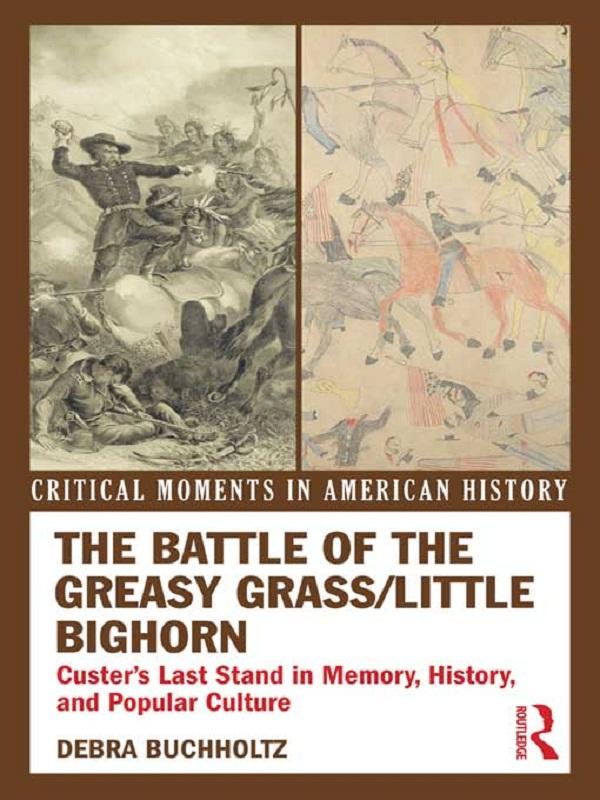
In June of 1876, the U.S. government’s plan to pressure the Lakota and Cheyenne people onto reservations came to a dramatic and violent end with a battle that would become enshrined in American memory. In the eyes of many Americans at the time, the Battle of Little Bighorn represented a symbolic struggle between the civilized and the savage. Known as the Battle of the Greasy Grass to the Lakota, the Battle of Little Bighorn to the people who suppressed them, and as Custer’s Last Stand in the annals of popular culture, the event continues to captivate students of American history.
In The Battle of Little Bighorn, Debra Buchholtz narrates the history of the battle and critically examines the legacy it has left. Through government documents, newspaper articles, and eyewitness accounts, Buchholtz situates the material and symbolic impact of the battle at the time. Using popular film and cultural references, she investigates the ways in which the wake of the event continues to shape the way students understand indigenous peoples, the Wild West, and the history of America.
Płać wygodnie kartą, Klarną, Apple Pay lub Google Pay. Nie jesteś zadowolony? Zawsze masz 14-dniową gwarancję zwrotu pieniędzy. Więcej przeczytasz w naszych warunkach. Masz pytania? Napisz do nas na hello@memmo.org.
Memmo ułatwia naukę – gdziekolwiek jesteś na świecie. U nas znajdziesz podręczniki i sprytne narzędzia do nauki w jednym miejscu: streszczenia, quizy, podcasty i fiszki. A do tego Ted, Twój kumpel do nauki, który odpowie na wszystko, co Cię nurtuje. Ponad 50 000 studentów już tu się uczy – stworzone, byś uczył się szybciej i mniej stresował.