
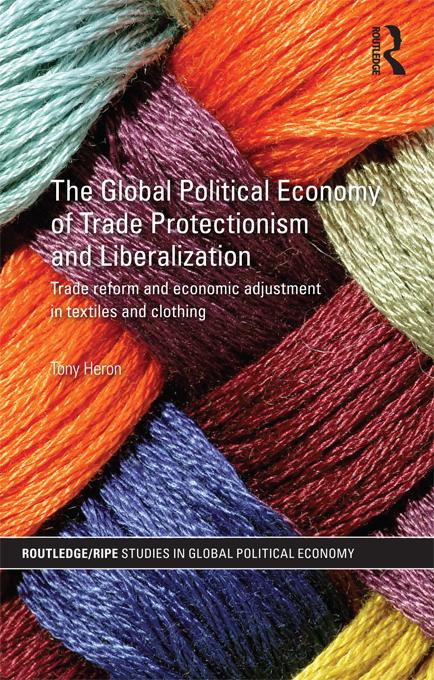
Given the widely-accepted premise that free trade is the best means of maximising overall societal welfare, why has it proven so difficult to achieve in certain industries? This book tackles arguably the most perennial and deep-rooted of all questions in political economy, and questions the incumbent orthodox liberal theories of collective action.
Using a historical institutionalist framework to explore and explain the political economy of trade protectionism and liberalization, this book is based on detailed case studies of the textiles and clothing sector in the EU, United States, China, Caribbean Basin and sub-Saharan Africa. From this, the book expands to discuss the origins of trade protectionism and examine the wider political effects of liberalization, offering an explanation of why a successful conclusion to the WTO ‘Doha’ round has proven to be so elusive. The book argues that the regulation of global trade - and the economic consequences that this has for both developed and developing countries - has been the result of the particular way in which trade preferences are mediated through political institutions.
The Global Political Economy of Trade Protectionism and Liberalization will be of interest to those studying and researching international and comparative political economy, developing area studies, economics, law and geography.
Płać wygodnie kartą, Klarną, Apple Pay lub Google Pay. Nie jesteś zadowolony? Zawsze masz 14-dniową gwarancję zwrotu pieniędzy. Więcej przeczytasz w naszych warunkach. Masz pytania? Napisz do nas na hello@memmo.org.
Memmo ułatwia naukę – gdziekolwiek jesteś na świecie. U nas znajdziesz podręczniki i sprytne narzędzia do nauki w jednym miejscu: streszczenia, quizy, podcasty i fiszki. A do tego Ted, Twój kumpel do nauki, który odpowie na wszystko, co Cię nurtuje. Ponad 50 000 studentów już tu się uczy – stworzone, byś uczył się szybciej i mniej stresował.