
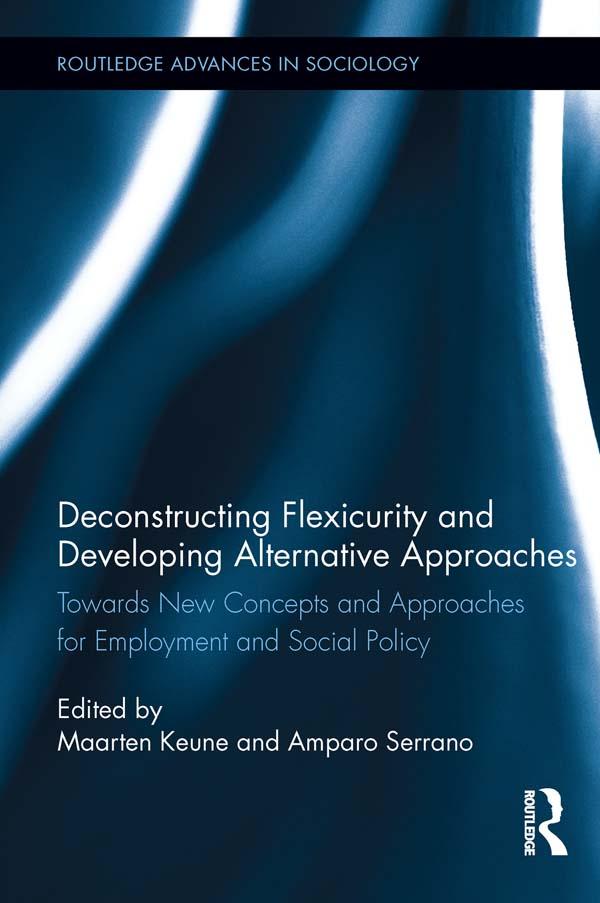
In recent years, the concept of flexicurity has come to occupy a central place in political and academic debates regarding employment and social policy. It fosters a view in which the need for continuously increasing flexibility is the basic assumption, and the understanding of security increasingly moves from social protection to self-insurance or individual adaptability. Moreover, it rejects the traditional contradictions between flexibility and security, blending the two into a single notion and thus depoliticizing the relationships between capital and labour. This volume provides a critical discussion of the flexicurity concept, the theories upon which it is built and the ideas that it transmits about work, unemployment and social justice. It shows that flexicurity fosters the further individualization of social protection, an increase in precariousness and the further weakening of labour in relation to capital. The authors present a series of alternative theoretical, normative and policy approaches that provide due attention to the collective and political dimension of vulnerability and allow for the development of new societal projects based on alternative values and assumptions.
Płać wygodnie kartą, Klarną, Apple Pay lub Google Pay. Nie jesteś zadowolony? Zawsze masz 14-dniową gwarancję zwrotu pieniędzy. Więcej przeczytasz w naszych warunkach. Masz pytania? Napisz do nas na hello@memmo.org.
Memmo ułatwia naukę – gdziekolwiek jesteś na świecie. U nas znajdziesz podręczniki i sprytne narzędzia do nauki w jednym miejscu: streszczenia, quizy, podcasty i fiszki. A do tego Ted, Twój kumpel do nauki, który odpowie na wszystko, co Cię nurtuje. Ponad 50 000 studentów już tu się uczy – stworzone, byś uczył się szybciej i mniej stresował.