
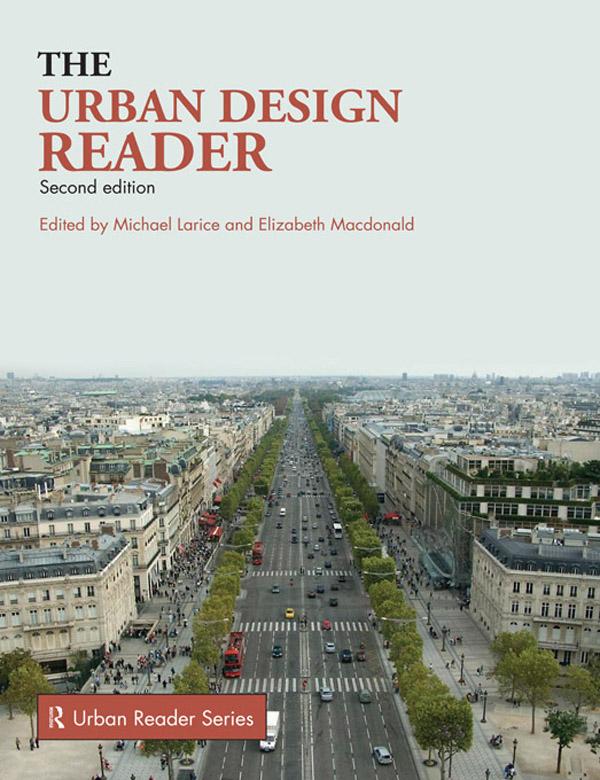
The second edition of The Urban Design Reader draws together the very best of classic and contemporary writings to illuminate and expand the theory and practice of urban design. Nearly 50 generous selections include seminal contributions from Howard, Le Corbusier, Lynch, and Jacobs to more recent writings by Waldheim, Koolhaas, and Sorkin. Following the widespread success of the first edition of The Urban Design Reader, this updated edition continues to provide the most important historical material of the urban design field, but also introduces new topics and selections that address the myriad challenges facing designers today.
The six part structure of the second edition guides the reader through the history, theory and practice of urban design. The reader is initially introduced to those classic writings that provide the historical precedents for city-making into the twentieth century. Part Two introduces the voices and ideas that were instrumental in establishing the foundations of the urban design field from the late 1950s up to the mid-1990s. These authors present a critical reading of the design professions and offer an alternative urban design agenda focused on vital and lively places. The authors in Part Three provide a range of urban design rationales and strategies for reinforcing local physical identity and the creation of memorable places. These selections are largely describing the outcomes of mid-century urban design and voicing concerns over the placeless quality of contemporary urbanism. The fourth part of the Reader explores key issues in urban design and development. Ideas about sprawl, density, community health, public space and everyday life are the primary focus here. Several new selections in this part of the book also highlight important international development trends in the Middle East and China. Part Five presents environmental challenges faced by the built environment professions today, including recent material on landscape urbanism, sustainability, and urban resiliency. The final part examines professional practice and current debates in the field: where urban designers work, what they do, their roles, their fields of knowledge and their educational development. The section concludes with several position pieces and debates on the future of urban design practice.
This book provides an essential resource for students and practitioners of urban design, drawing together important but widely dispersed writings. Part and section introductions are provided to assist readers in understanding the context of the material, summary messages, impacts of the writing, and how they fit into the larger picture of the urban design field.
Płać wygodnie kartą, Klarną, Apple Pay lub Google Pay. Nie jesteś zadowolony? Zawsze masz 14-dniową gwarancję zwrotu pieniędzy. Więcej przeczytasz w naszych warunkach. Masz pytania? Napisz do nas na hello@memmo.org.
Memmo ułatwia naukę – gdziekolwiek jesteś na świecie. U nas znajdziesz podręczniki i sprytne narzędzia do nauki w jednym miejscu: streszczenia, quizy, podcasty i fiszki. A do tego Ted, Twój kumpel do nauki, który odpowie na wszystko, co Cię nurtuje. Ponad 50 000 studentów już tu się uczy – stworzone, byś uczył się szybciej i mniej stresował.