
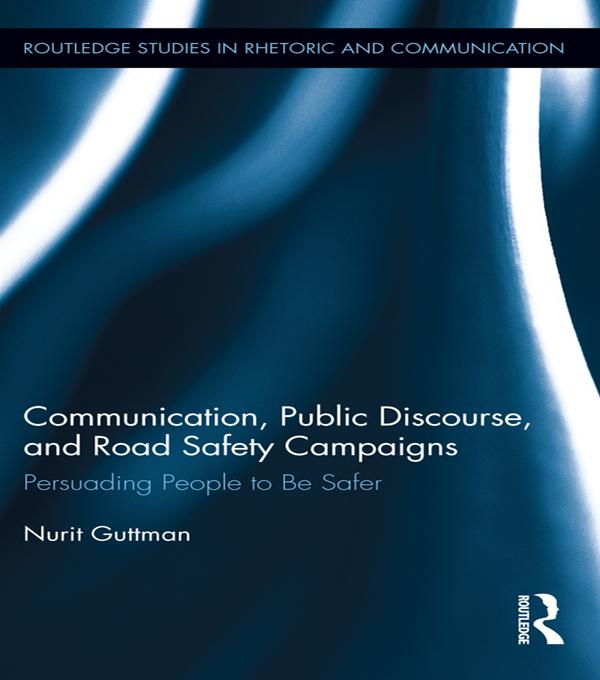
This book discusses the use of communication campaigns to promote road safety, arguing that they need to elicit public discourse on issues pertaining to culture, equity, gender, workplace norms, environmental issues, and social solidarity. Increasingly, new media channels and formats are employed in the dissemination process, making road safety-related messages ubiquitous, and often controversial. Policy makers, educators, researchers, and the public continue to debate the utility and morality of some of the influence tactics employed in these messages, such as the use of graphic images of injury or death, stigmatization (or "blame and shame"), and the use of "black humor." Guttman argues that influencing road safety requires making changes in normative and cultural conceptions of broader issues in society, yet the typical discourse on road safety tends to focus on individual attitudes and practices. The book highlights the importance of social and behavioral theory in communication campaigns on road safety, and critiques the tendency to focus on individual cognition, affect, and risk conceptions rather than on normative, structural, and cultural factors. The volume positions the discourse on road safety as a social issue, and treats road safety behavior as a social activity that directly relates to other public issues, social values, and social policy, while discussing potential uses of social media and participatory approaches. The discussion turns to the role of road safety communication campaigns as part of a democratic process of eliciting public discourse, including how contemporary society could address broader issues of risk and safety.
Płać wygodnie kartą, Klarną, Apple Pay lub Google Pay. Nie jesteś zadowolony? Zawsze masz 14-dniową gwarancję zwrotu pieniędzy. Więcej przeczytasz w naszych warunkach. Masz pytania? Napisz do nas na hello@memmo.org.
Memmo ułatwia naukę – gdziekolwiek jesteś na świecie. U nas znajdziesz podręczniki i sprytne narzędzia do nauki w jednym miejscu: streszczenia, quizy, podcasty i fiszki. A do tego Ted, Twój kumpel do nauki, który odpowie na wszystko, co Cię nurtuje. Ponad 50 000 studentów już tu się uczy – stworzone, byś uczył się szybciej i mniej stresował.