
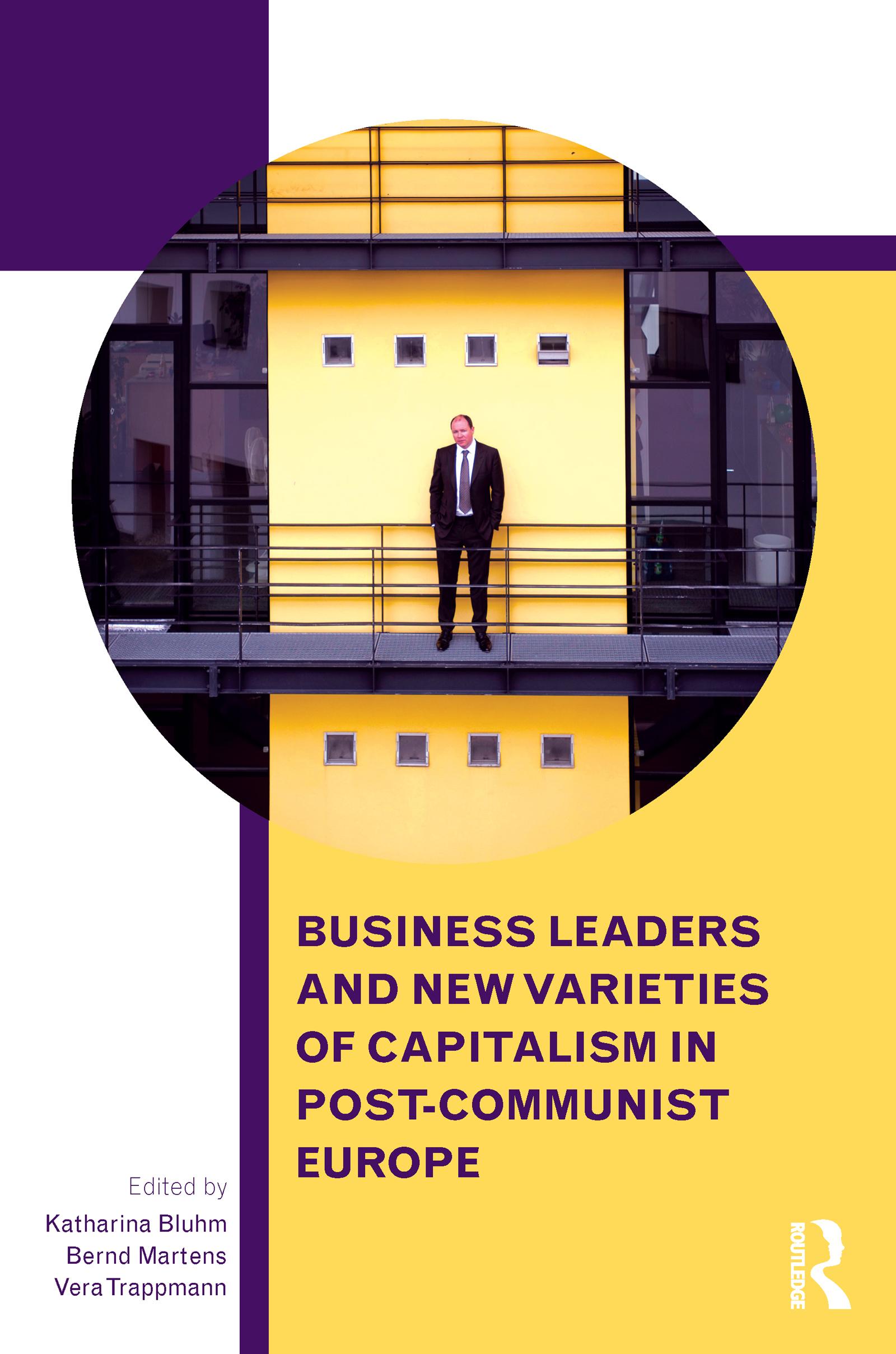
Business leaders exert extraordinary influence on institution building in market economies but they think and act within institutional settings. This book combines both an elite approach with a varieties-of-capitalism approach. Comparing Poland, Hungary and East and West Germany, we perceive the transformations in East Central Europe and in Germany after 1989 as being intertwined.
Based on a joint survey, this book seeks to measure the level of the convergence of ideas among European business leaders, assuming it to be more extensive than the institutional convergence expected under the dominance of neoliberal discourse. Analyzing the institutional framework, organizational features like size, ownership and labour relations, and subjective characteristics like age, social origin, career patterns and attitudes of the recent business elites, we found significant differences between countries and the types of organization. The growing importance of economic degrees and internationalization shows astonishingly little explanatory power on the views of business leaders. The idea of a coordinated market economy is still relatively widespread among Germans, while their Hungarian and Polish counterparts are more likely to display a minimalist view of corporate responsibility to society and adverse attitudes towards employee representation. However, their attitudes frequently tend to be inconsistent, which mirrors the mixed type of capitalism in East Central Europe.
Płać wygodnie kartą, Klarną, Apple Pay lub Google Pay. Nie jesteś zadowolony? Zawsze masz 14-dniową gwarancję zwrotu pieniędzy. Więcej przeczytasz w naszych warunkach. Masz pytania? Napisz do nas na hello@memmo.org.
Memmo ułatwia naukę – gdziekolwiek jesteś na świecie. U nas znajdziesz podręczniki i sprytne narzędzia do nauki w jednym miejscu: streszczenia, quizy, podcasty i fiszki. A do tego Ted, Twój kumpel do nauki, który odpowie na wszystko, co Cię nurtuje. Ponad 50 000 studentów już tu się uczy – stworzone, byś uczył się szybciej i mniej stresował.