
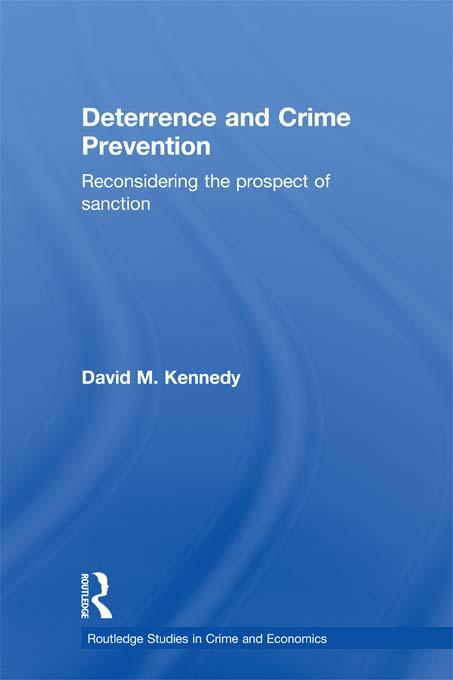
Deterrence is at the heart of the preventive aspiration of criminal justice. Deterrence, whether through preventive patrol by police officers or stiff prison sentences for violent offenders, is the principal mechanism through which the central feature of criminal justice, the exercise of state authority, works – it is hoped -- to diminish offending and enhance public safety. And however well we think deterrence works, it clearly often does not work nearly as well as we would like – and often at very great cost.
Drawing on a wide range of scholarly literatures and real-world experience, Kennedy argues that we should reframe the ways in which we think about and produce deterrence. He argues that many of the ways in which we seek to deter crime in fact facilitate offending; that simple steps such as providing clear information to offenders could transform deterrence; that communities may be far more effective than legal authorities in deterring crime; that apparently minor sanctions can deter more effectively than draconian ones; that groups, rather than individual offenders, should often be the focus of deterrence; that existing legal tools can be used in unusual but greatly more effective ways; that even serious offenders can be reached through deliberate moral engagement; and that authorities, communities, and offenders – no matter how divided – share and can occupy hidden common ground.
The result is a sophisticated but ultimately common-sense and profoundly hopeful case that we can and should use new deterrence strategies to address some of our most important crime problems. Drawing on and expanding on the lessons of groundbreaking real-world work like Boston’s Operation Ceasefire – credited with the "Boston Miracle" of the 1990s – "Deterrence and Crime Prevention" is required reading for scholars, law enforcement practitioners, and all with an interest in public safety and the health of communities.
Płać wygodnie kartą, Klarną, Apple Pay lub Google Pay. Nie jesteś zadowolony? Zawsze masz 14-dniową gwarancję zwrotu pieniędzy. Więcej przeczytasz w naszych warunkach. Masz pytania? Napisz do nas na hello@memmo.org.
Memmo ułatwia naukę – gdziekolwiek jesteś na świecie. U nas znajdziesz podręczniki i sprytne narzędzia do nauki w jednym miejscu: streszczenia, quizy, podcasty i fiszki. A do tego Ted, Twój kumpel do nauki, który odpowie na wszystko, co Cię nurtuje. Ponad 50 000 studentów już tu się uczy – stworzone, byś uczył się szybciej i mniej stresował.