
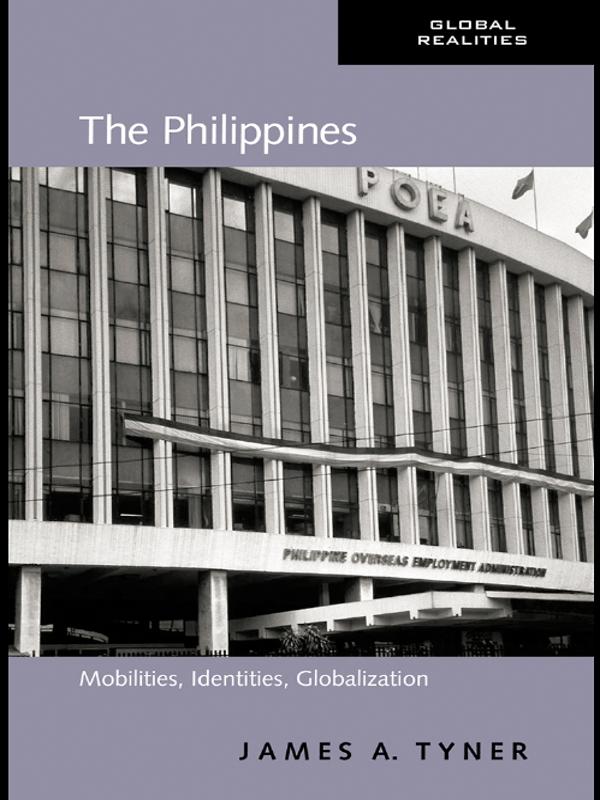
Nearly five million migrant workers from the Philippines are employed in over 190 countries and territories. They work as doctors and domestic helpers, engineers and entertainers, seamstresses and surveyors. It is through their collective labor that the Philippines has assumed a global presence.
For over five centuries the Philippines has been integrated into the world economy. Only recently, however, has the Philippines been a pro-active agent in the production of a global economy. Since the 1970s the Philippine state, in connection with myriad private institutions, has recruited, trained, marketed, and deployed a mobile work-force. Annually, approximately one million migrant workers travel to all corners of the world. The Philippines seeks to understand how the Philippines has become the world’s largest exporter of government-sponsored temporary contract labor and, in the process, has dramatically reshaped both the processes of globalization and also our understanding of globalization as concept.
Płać wygodnie kartą, Klarną, Apple Pay lub Google Pay. Nie jesteś zadowolony? Zawsze masz 14-dniową gwarancję zwrotu pieniędzy. Więcej przeczytasz w naszych warunkach. Masz pytania? Napisz do nas na hello@memmo.org.
Memmo ułatwia naukę – gdziekolwiek jesteś na świecie. U nas znajdziesz podręczniki i sprytne narzędzia do nauki w jednym miejscu: streszczenia, quizy, podcasty i fiszki. A do tego Ted, Twój kumpel do nauki, który odpowie na wszystko, co Cię nurtuje. Ponad 50 000 studentów już tu się uczy – stworzone, byś uczył się szybciej i mniej stresował.