
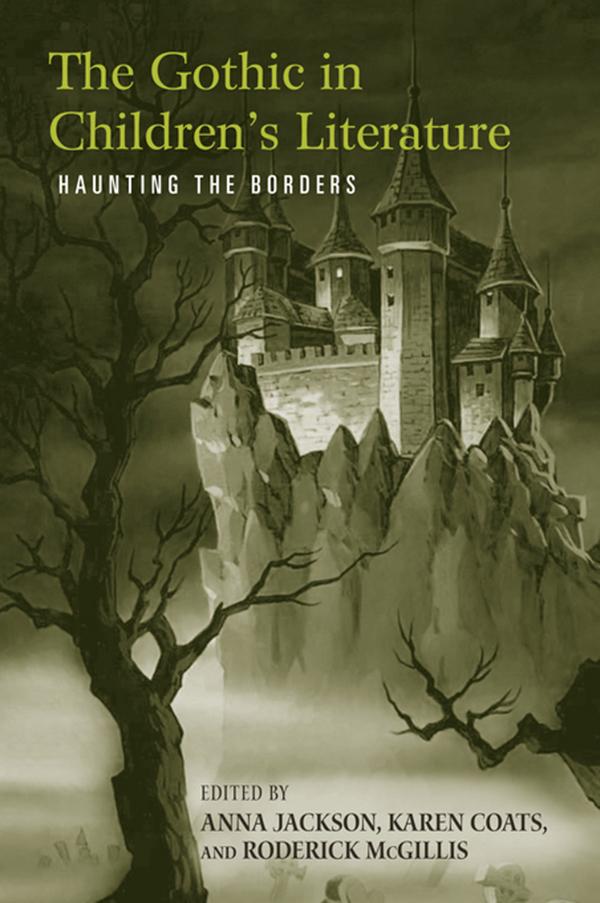
From creepy picture books to Harry Potter, Lemony Snicket, the Spiderwick Chronicles, and countless vampire series for young adult readers, fear has become a dominant mode of entertainment for young readers. The last two decades have seen an enormous growth in the critical study of two very different genres, the Gothic and children’s literature.
The Gothic, concerned with the perverse and the forbidden, with adult sexuality and religious or metaphysical doubts and heresies, seems to represent everything that children’s literature, as a genre, was designed to keep out. Indeed, this does seem to be very much the way that children’s literature was marketed in the late eighteenth century, at exactly the same time that the Gothic was really taking off, written by the same women novelists who were responsible for the promotion of a safe and segregated children’s literature.
This collection examines the early intersection of the Gothic and children’s literature and the contemporary manifestations of the gothic impulse, revealing that Gothic elements can, in fact, be traced in children’s literature for as long as children have been reading.
Płać wygodnie kartą, Klarną, Apple Pay lub Google Pay. Nie jesteś zadowolony? Zawsze masz 14-dniową gwarancję zwrotu pieniędzy. Więcej przeczytasz w naszych warunkach. Masz pytania? Napisz do nas na hello@memmo.org.
Memmo ułatwia naukę – gdziekolwiek jesteś na świecie. U nas znajdziesz podręczniki i sprytne narzędzia do nauki w jednym miejscu: streszczenia, quizy, podcasty i fiszki. A do tego Ted, Twój kumpel do nauki, który odpowie na wszystko, co Cię nurtuje. Ponad 50 000 studentów już tu się uczy – stworzone, byś uczył się szybciej i mniej stresował.